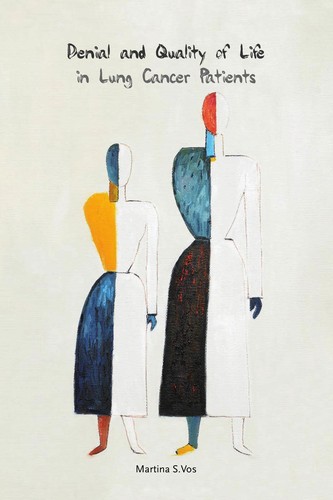
Denial and Quality of Life in Lung Cancer Patients
0
0
As an Amazon Associate and affiliate partner, Menrva Books earns from qualifying purchases. Learn more
Author Description
Annotation Denial in cancer patients is a well-known concept. The definition of denial, however, is not unequivocal and covers different ways of evading painful events or feelings. This thesis studies denial and its relation to the quality of life in lung cancer patients. To assess the level of denial the 'Denial of Cancer Interview' (DCI) was developed. Denial was measured at different time points in the course of the disease. The key-finding from this study is that patients fare better when they express a moderate level of denial or increase their level of denial from the moment of diagnosis over time. This study shows convincingly that denial in lung cancer patients deserves attention in clinical practice. In this era of self-disclosure it is good to realize that some patients need protection against unbearable facts and feelings. Denial can serve this need and should be respected. This title can be previewed in Google Books - http://books.google.com/books?vid=ISBN9789085550266.
Menrva's Summary
THE THESIS
This thesis investigates the complex role of denial in the lives of lung cancer patients and its impact on their quality of life. Martina Sita Vos explores the multifaceted nature of denial, which is not uniformly defined and encompasses various strategies for evading distressing realities. The study introduces the 'Denial of Cancer Interview' (DCI) to quantify denial levels at different stages of the disease. The central finding suggests that patients experience better outcomes with moderate or increasing levels of denial following diagnosis.
THE SCOPE MAP
- An exploration of the concept of denial in cancer patients.
- A detailed examination of the relationship between denial and quality of life in lung cancer patients.
- Development and application of the 'Denial of Cancer Interview' (DCI) for measuring denial.
- Analysis of denial levels at multiple time points throughout the course of the disease.
- Key findings on the correlation between denial levels and patient well-being.
- Clinical implications for respecting and utilizing denial as a coping mechanism.
THE AUTHORITY PERSPECTIVE
The study posits that denial, often viewed negatively, can serve a protective function for lung cancer patients, shielding them from unbearable facts and feelings. The research indicates that a moderate level of denial, or an increase in denial over time from diagnosis, is associated with a better quality of life. This suggests that denial warrants attention and respect within clinical practice, challenging the prevailing emphasis on complete self-disclosure.
Page Count:
179
Publication Date:
2009-01-01
ISBN-10:
9048511399
ISBN-13:
9789048511396
Psychology
Health
Non-Fiction
Quality of Life
Oncology
Community Tags
Similar Books