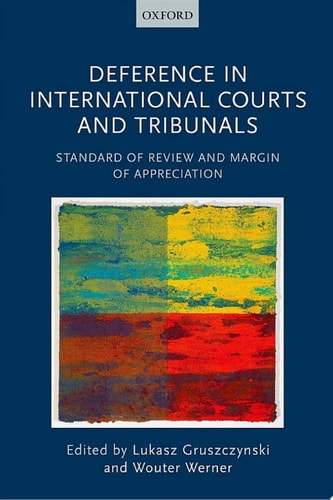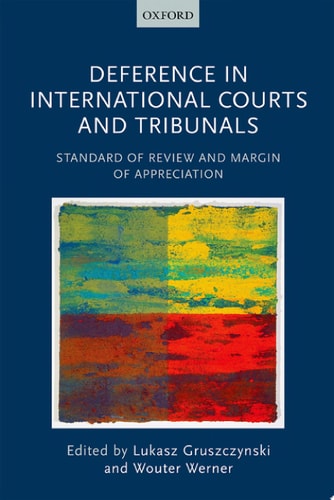
Deference in International Courts and Tribunals
0
0
As an Amazon Associate and affiliate partner, Menrva Books earns from qualifying purchases. Learn more
Author Description
International Courts And Tribunals Are Often Asked To Review Decisions Originally Made By Domestic Decision-makers. This Can Often Be A Source Of Tension, As The International Courts And Tribunals Need To Judge How Far To Defer To The Original Decisions Of The National Bodies. As International Courts And Tribunals Have Proliferated, Different Courts Have Applied Differing Levels Of Deference To Those Originial Decisions, Which Can Lead To A Fragmentation In International Law. International Courts In Such Positions Rely On Two Key Doctrines: The Standard Of Review And The Margin Of Appreciation. The Standard Of Review Establishes The Extent To Which National Decisions Relating To Factual, Legal, Or Political Issues Arising In The Case Are Re-examined In The International Court. The Margin Of Appreciation Is The Extent To Which National Legislative, Executive, And Judicial Decision-makers Are Allowed To Reflect Diversity In Their Interpretation Of Human Rights Obligations. The Book Begins By Providing An Overview Of The Margin Of Appreciation And Standard Of Review, Recognising That While The Margin Of Appreciation Explicitly Acknowledges The Existence Of Such Deference, The Standard Of Review Does Not: It Is Rather A Procedural Mechanism. It Looks In-depth At How The Public Policy Exception Has Been Assessed By The European Court Of Justice And The Wto Dispute Settlement Bodies. It Examines How The European Court Of Human Rights Has Taken An Evidence-based Approach Towards The Margin Of Appreciation, As Well As How It Has Addressed Issues Of Hate Speech. The Inter-american System Is Also Investigated, And It Is Established How Far Deference Is Possible Within That Legal Organisation. Finally, The Book Studies How A Range Of Other International Courts, Such As The International Criminal Court, And The Law Of The Sea Tribunal, Have Approached These Two Core Doctrines.
Menrva's Summary
THE THESIS
This book investigates the complex tension between international courts and domestic decision-makers regarding the appropriate level of deference afforded to national authorities. Authors Lukasz Gruszczynski and Wouter Werner analyze how international tribunals navigate the balance between global legal standards and local sovereignty. By examining the doctrines of the standard of review and the margin of appreciation, the authors provide a framework for understanding how international bodies evaluate factual, legal, and political decisions made at the national level.
THE SCOPE MAP
What You Will Find
- Comparative analysis of the margin of appreciation and standard of review doctrines.
- Case studies involving the European Court of Justice, the WTO, and the European Court of Human Rights.
- Investigation into the Inter-American system and the International Criminal Court.
- Examination of the public policy exception and hate speech jurisprudence.
Scope Limits
- The text focuses primarily on institutional judicial interaction rather than exhaustive historical accounts of every international tribunal.
- It does not provide a comprehensive manual for litigating specific cases but rather a theoretical and procedural overview.
THE AUTHORITY PERSPECTIVE
Legal scholars and practitioners identify this work as a significant contribution to the study of international judicial fragmentation. Readers frequently note the academic density of the prose, making it a valuable resource for advanced students and professionals in the field of international law.
Page Count:
400
Publication Date:
2014-01-01
Publisher:
Oup Oxford
ISBN-10:
0191026492
ISBN-13:
9780191026492
Law
International Law
Legal Theory
Human rights
Jurisprudence
Community Tags
Similar Books