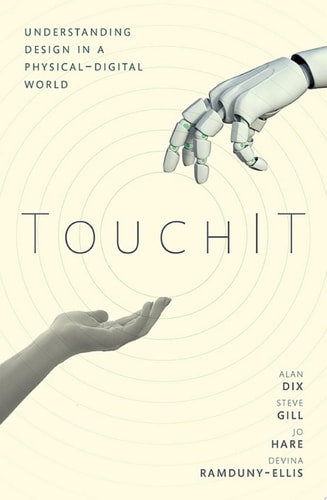
TouchIT: Understanding Design in a Physical-Digital World
0
0
As an Amazon Associate and affiliate partner, Menrva Books earns from qualifying purchases. Learn more
Author Description
Digital technology is fundamentally altering the world we live in, but can only be truly understood in relation to the physical world we all inhabit. The most successful future products and policies will be those that take this rich digital/physical ecology seriously. The physical world is increasingly filled with digital products to the extent that the boundaries of digital and physical reality become blurred. From mundane devices such as mobile phones and washing machines, to esoteric research including tangible computation and body implants, we continually bridge two worlds literally touching buttons and dials and simultaneously interacting with the digital systems that lie behind them. The connection between pure thought and abstract information is through solid keyboard and mouse; but likewise the material world of buildings, cars and running shoes is suffused with computation through sensors, displays and flashing LEDs. How do people understand this world and how can designers create usable hybrid physical-digital products? TouchIT brings together insights from human-computer interaction and industrial design, exploring these themes under four main headings: human body and mind; objects and things; space; and information and computation. In considering each, the authors look into the underlying physical processes, our human understanding of them, and then the way these inform and are informed by digital design. The end draws together the theoretical and practical implications of this for design, including practical advice, potential tools, and philosophical underpinnings.
Menrva's Summary
THE THESIS
How can designers effectively bridge the gap between human cognition and the increasingly blurred boundaries of physical and digital environments? The authors, experts in human-computer interaction and industrial design, argue that successful product development requires a deep understanding of the hybrid ecology where physical objects and digital systems intersect. They provide a framework for analyzing how human perception of physical processes informs the creation of usable, integrated technology.
THE SCOPE MAP
What You Will Find
- Analysis of the human body and mind in relation to physical-digital interfaces
- Exploration of object design, spatial interaction, and computational integration
- Practical design advice and theoretical philosophical underpinnings
- Methodologies for creating hybrid products that function across physical and digital domains
Scope Limits
- Does not provide a comprehensive history of computing hardware
- Does not focus on software-only user interface design without physical components
THE AUTHORITY PERSPECTIVE
Experts recognize this text as a bridge between academic human-computer interaction theory and practical industrial design application. Readers frequently note that the prose provides a structured approach for designers looking to navigate the complexities of tangible computation and hybrid product development.
Page Count:
800
Publication Date:
2022-01-01
Publisher:
OUP Oxford
ISBN-10:
0191028673
ISBN-13:
9780191028670
Digital Media
Professional Career & Trade
Design
Technology
Human Interaction
Educational Software
Community Tags
Similar Books