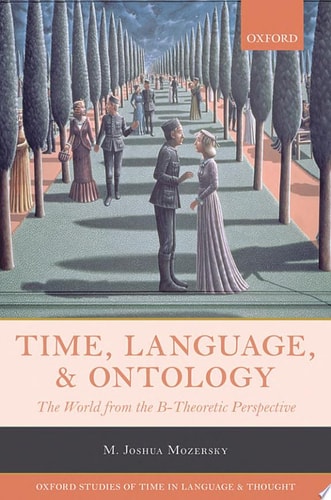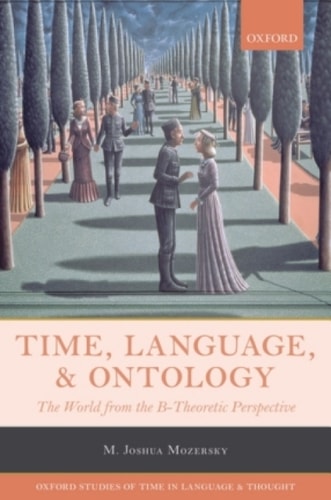
Time, Language, and Ontology: The World from the B-Theoretic Perspective
0
0
As an Amazon Associate and affiliate partner, Menrva Books earns from qualifying purchases. Learn more
Author Description
This book brings together, in a novel way, an account of the structure of time with an account of our language and thought about time. Joshua Mozersky argues that it is possible to reconcile the human experience of time, which is centred on the present, with the objective conception of time, according to which all moments are intrinsically alike. He defends a temporally centreless ontology along with a tenseless semantics that is compatible with - and indeed helps to explain the need for - tensed language and thought. This theory of time also, it is argued, helps to elucidate the nature of change and temporal passage, neither of which need be denied nor relegated to the realm of subjective experience only. The book addresses a variety of topics including whether the past and future are real; whether temporal passage is a genuine phenomenon or merely a subjective illusion; how the asymmetry of time is to be understood; the nature of representation; how something can change its properties yet retain its identity; and whether objects are three-dimensional or four-dimensional. It is a wide-ranging examination of recent issues in metaphysics, philosophy of language and the philosophy of science and presents a compelling picture of the relationship of human beings to the spatiotemporal world.
Menrva's Summary
THE THESIS
This book investigates whether a tenseless, B-theoretic ontology can be reconciled with the human experience of time and the use of tensed language. M. Joshua Mozersky, a scholar in the field of metaphysics, utilizes a framework that bridges the gap between objective, four-dimensional temporal structures and the subjective, present-centered nature of human thought. By defending a tenseless semantics, the author argues that the objective reality of time does not necessitate the denial of change or temporal passage, but rather provides a more rigorous explanation for these phenomena.
THE SCOPE MAP
What You Will Find
- Analysis of B-theory versus A-theory of time
- Examination of four-dimensionalism and object identity
- Discussion on the reality of the past and future
- Investigation into the nature of temporal asymmetry and change
Scope Limits
- The text focuses primarily on analytic metaphysics and philosophy of language rather than empirical physics or experimental psychology.
THE AUTHORITY PERSPECTIVE
Experts in the field of analytic philosophy recognize this work as a significant contribution to the ongoing debate regarding temporal ontology. Readers frequently note the academic density of the prose, which requires a strong background in formal logic and metaphysical discourse.
Page Count:
288
Publication Date:
2015-01-01
Publisher:
OUP Oxford
ISBN-10:
0191028002
ISBN-13:
9780191028007
Philosophy
English & College Success
Philosophy of
Ontology
English
Time
Linguistics
Metaphysics