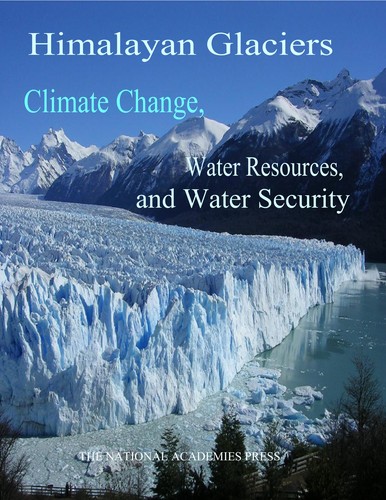
Himalayan Glaciers
0
0
As an Amazon Associate and affiliate partner, Menrva Books earns from qualifying purchases. Learn more
Author Description
Scientific evidence shows that most glaciers in South Asia's Hindu Kush Himalayan region are retreating, but the consequences for the region's water supply are unclear, this report finds. The Hindu Kush Himalayan region is the location of several of Asia's great river systems, which provide water for drinking, irrigation, and other uses for about 1.5 billion people. Recent studies show that at lower elevations, glacial retreat is unlikely to cause significant changes in water availability over the next several decades, but other factors, including groundwater depletion and increasing human water use, could have a greater impact. Higher elevation areas could experience altered water flow in some river basins if current rates of glacial retreat continue, but shifts in the location, intensity, and variability of rain and snow due to climate change will likely have a greater impact on regional water supplies. Himalayan Glaciers: Climate Change, Water Resources, and Water Security makes recommendations and sets guidelines for the future of climate change and water security in the Himalayan Region. This report emphasizes that social changes, such as changing patterns of water use and water management decisions, are likely to have at least as much of an impact on water demand as environmental factors do on water supply. Water scarcity will likely affect the rural and urban poor most severely, as these groups have the least capacity to move to new locations as needed. It is predicted that the region will become increasingly urbanized as cities expand to absorb migrants in search of economic opportunities. As living standards and populations rise, water use will likely increase-for example, as more people have diets rich in meat, more water will be needed for agricultural use. The effects of future climate change could further exacerbate water stress. Himalayan Glaciers: Climate Change, Water Resources, and Water Security explains that changes in the availability of water r
Menrva's Summary
THE THESIS
The retreat of Himalayan glaciers presents an uncertain future for water security in South Asia, impacting billions of people. While lower-elevation glacial melt may not significantly alter water availability in the coming decades, groundwater depletion and increased human consumption pose greater immediate threats. Higher elevations might experience altered river flows, but climate change-induced shifts in precipitation patterns are expected to have a more profound effect on regional water supplies. The report emphasizes that social factors, such as water use patterns and management decisions, will be as critical as environmental supply changes in determining future water demand, with the rural and urban poor being most vulnerable to scarcity.
THE SCOPE MAP
- Analysis of glacial retreat in the Hindu Kush Himalayan region.
- Assessment of consequences for regional water supply and security.
- Impact of climate change on precipitation patterns and water availability.
- Evaluation of factors beyond glacial melt, including groundwater depletion and human water use.
- Discussion of the disproportionate impact of water scarcity on vulnerable populations.
- Recommendations and guidelines for future climate change and water security strategies in the region.
- Consideration of socio-economic factors influencing water demand and management.
THE AUTHORITY PERSPECTIVE
This report from the National Research Council addresses the critical issue of Himalayan glacier retreat and its implications for water security in South Asia. It synthesizes scientific evidence to highlight the complex interplay between climate change, glacial melt, and human water use. The findings suggest that while glacial retreat is a concern, other factors like groundwater depletion and societal changes in water demand may have more immediate and significant impacts. The report provides recommendations for future policy and research, emphasizing the vulnerability of certain populations to water scarcity.
Page Count:
143
Publication Date:
2012-01-01
ISBN-10:
0309260981
ISBN-13:
9780309260985
Non-Fiction
Science
Water Resources
Climate Change
Environment
South Asia
Community Tags
Similar Books