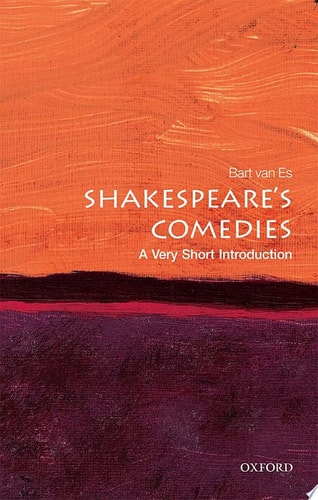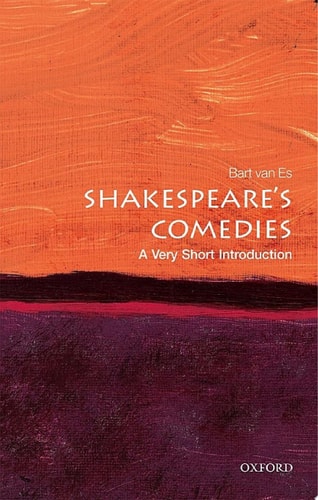
Shakespeare's Comedies: A Very Short Introduction
0
0
As an Amazon Associate and affiliate partner, Menrva Books earns from qualifying purchases. Learn more
Author Description
From The Two Gentlemen of Verona in the early 1590s to The Two Noble Kinsmen at the end of his career around 1614, Shakespeare wrote at least eighteen plays that can be called 'comedies': a far higher number than that for any other genre in which he wrote. So what is a Shakespearean comedy? We associate these plays with such themes as mistaken identities, happy marriages, and exuberant cross dressing, but how representative are these of the oeuvre as a whole? In this Very Short Introduction, Bart van Es explores the full range of the playwright's comic writing, from the neat classical plotting of early works like The Comedy of Errors to the corrupt world of the so-called problem plays, written in the middle years of Shakespeare's life. Examining Shakespeare's influences and sources, van Es compares his plays to those of his rivals, and looks at the history of the plays in performance, from the biographies of Shakespeare's original actors to the plays' endless reinvention in modern stage productions and in films. Identifying the key qualities that make Shakespearean comedy distinctive, van Es traces the changing nature of Shakespeare's comic writing over the course of a career that spanned nearly a quarter century of theatrical change. ABOUT THE SERIES: The Very Short Introductions series from Oxford University Press contains hundreds of titles in almost every subject area. These pocket-sized books are the perfect way to get ahead in a new subject quickly. Our expert authors combine facts, analysis, perspective, new ideas, and enthusiasm to make interesting and challenging topics highly readable.
Menrva's Summary
THE THESIS
This book investigates the defining characteristics, evolution, and enduring cultural impact of William Shakespeare's comedic works. Bart van Es, a professor of English literature at the University of Oxford, utilizes historical context, performance history, and textual analysis to argue that Shakespearean comedy is a diverse and shifting category rather than a static genre. He examines how the playwright adapted classical influences and responded to the changing theatrical landscape of the late sixteenth and early seventeenth centuries.
THE SCOPE MAP
What You Will Find
- Analysis of the chronological development of Shakespeare's eighteen comedies.
- Examination of the transition from early classical plotting to later problem plays.
- Discussion of performance history from original actors to modern film adaptations.
- Comparative analysis between Shakespeare and his contemporary rivals.
Scope Limits
- The text does not provide a comprehensive scene-by-scene analysis of every individual play.
- It does not focus on the tragedies or histories except where they intersect with comic elements.
THE AUTHORITY PERSPECTIVE
Experts and students frequently cite this work as a concise and accessible entry point for understanding the complexity of Shakespeare's comic output. Readers often note that the prose is dense with historical insight while remaining manageable for those new to academic literary criticism.
Page Count:
144
Publication Date:
2016-01-01
Publisher:
OUP Oxford
ISBN-10:
0191034967
ISBN-13:
9780191034961
Drama
Non-Fiction
Humanities
Comedy
Literary Criticism
Theater History