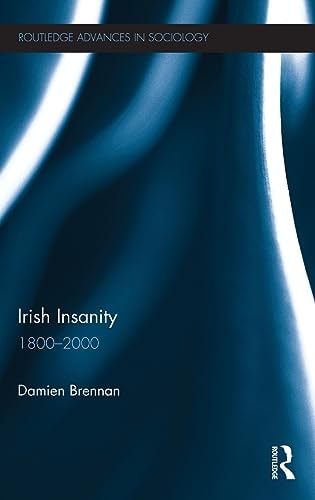
Irish Insanity, 1800-2000
0
0
As an Amazon Associate and affiliate partner, Menrva Books earns from qualifying purchases. Learn more
Author Description
The national public asylum system in Ireland was established during the early nineteenth century and continued to operate up to the close of the twentieth century. These asylums / mental hospitals were a significant physical and social feature of Irish communities. They were used intensively and provided a convenient form of institutional intervention to manage a host of social problems. Irish Insanity identifies the long-term trends in institutional residency through the development of a detailed empirical data set, based on an analysis of original copies of the reports of Inspector of Asylums/Mental Hospitals in Ireland. Damien Brennan explores core social and historical features linked to this data including: the political context governance and social policy the relationship between church and state changing economic structures and social deprivation professionalization legislation and systems of admission and discharge categorisation and diagnostic criteria international developments family dynamics This book demonstrates that the actual rate of asylum utilisation in Ireland was the highest by international standards, but challenges the idea that an "epidemic of Irish insanity" actually existed. Offering a historical and sociological insight into an institutional legacy that is unusual within the international context, this book will be of particular relevance and interest to scholars within the fields of sociology, criminology, law, history, Irish studies, social policy, anthropology, nursing and medicine.
Menrva's Summary
THE THESIS
This book investigates the historical trajectory and societal impact of Ireland's national asylum system from its establishment in the early nineteenth century to its closure in the late twentieth century. Damien Brennan, drawing on extensive empirical data from the reports of the Inspector of Asylums/Mental Hospitals, examines the complex interplay of political, social, and economic factors that shaped institutional residency. The study explores governance, church-state relations, economic shifts, social deprivation, professionalization, legislation, and diagnostic criteria, all within the context of Ireland's unique institutional legacy.
THE SCOPE MAP
- Analysis of original reports from the Inspector of Asylums/Mental Hospitals in Ireland.
- Examination of the political context, governance, and social policy surrounding asylums.
- Exploration of the relationship between church and state in mental healthcare.
- Investigation of changing economic structures and social deprivation's impact.
- Discussion of professionalization, legislation, and admission/discharge systems.
- Analysis of categorization and diagnostic criteria used within asylums.
- Comparison of asylum utilization rates with international standards.
THE AUTHORITY PERSPECTIVE
This book offers a detailed historical and sociological insight into Ireland's institutional legacy in mental healthcare. It is particularly relevant for scholars in sociology, criminology, law, history, Irish studies, social policy, anthropology, nursing, and medicine. The work demonstrates that Ireland had the highest rate of asylum utilization internationally, while also challenging the notion of an 'epidemic of Irish insanity'. The research provides a nuanced understanding of how social problems were managed through institutional intervention.
Page Count:
167
Publication Date:
2014-01-01
Publisher:
Routledge
ISBN-10:
0415522250
ISBN-13:
9780415522250
Non-Fiction
History
Social policy
Social History
Irish Studies
Law
Criminology
Sociology
Medicine
Community Tags
Similar Books