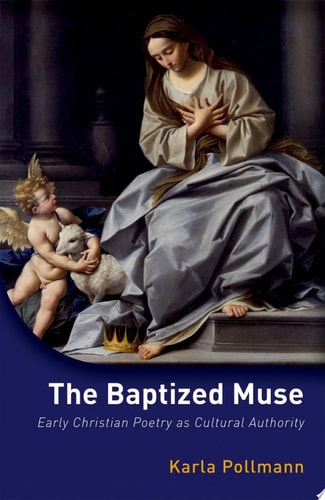
The Baptized Muse: Early Christian Poetry as Cultural Authority
0
0
As an Amazon Associate and affiliate partner, Menrva Books earns from qualifying purchases. Learn more
Author Description
With The Rise Of Christianity In The Roman Empire Increasing Numbers Of Educated People Converted To This New Belief. As Christianity Did Not Have Its Own Educational Institutions The Issue Of How To Harmonize Pagan Education And Christian Convictions Became Increasingly Pressing. Especially Classical Poetry, The Staple Diet Of Pagan Education, Was Considered To Be Morally Corrupting (due To Its Deceitful Mythological Content) And Damaging For The Salvation Of The Soul (because Of The False Gods It Advocated). But Christianity Recoiled From An Unqualified Anti-intellectual Attitude, While At The Same Time The Experiment Of Creating An Idiosyncratic Form Of Genuinely Christian Poetry Failed (the Sole Exception Being The Poet Commodianus). In The Baptized Muse: Early Christian Poetry As Cultural Authority, Karla Pollmann Argues That, Instead, Christian Poets Made Creative Use Of The Classical Literary Tradition, And—in Addition To Blending It With Judaeo-christian Biblical Exegesis—exploited Poetry's Special Ability Of Enhancing Communicative Effectiveness And Impact Through Aesthetic Means. Pollman Explores These Strategies Through A Close Analysis Of A Wide Range Of Christian, And For Comparison Partly Also Pagan, Writers Mainly From The Fourth To Sixth Centuries. She Reveals That Early Christianity Was Not A Hermetically Sealed Uniform Body, But Displays A Rich Spectrum Of Possibilities In Dealing With The Past And A Willingness To Engage With And Adapt The Surrounding Culture(s), Thereby Developing Diverse And Changing Responses To Historical Challenges. By Demonstrating Throughout That Authority Is A Key In Understanding The Long Denigrated And Misunderstood Early Christian Poets, This Book Reaches The Ground-breaking Conclusion That Early Christian Poetry Is An Art Form That Gains Its Justification By Adding Cultural Authority To Christianity. Thus, In A Wider Sense It Engages With The Recently Developed Interdisciplinary Scholarly Interest In Aspects Of Religio
Menrva's Summary
THE THESIS
This book investigates how early Christian poets in the Roman Empire navigated the tension between their faith and the established pagan educational tradition. Karla Pollmann, a scholar of classical and early Christian literature, examines how these writers utilized classical poetic forms to bolster the cultural authority of Christianity. She argues that rather than rejecting classical culture, these poets strategically adapted it to enhance the communicative impact of biblical exegesis and theological discourse.
THE SCOPE MAP
What You Will Find
- Analysis of Christian and pagan literary works from the fourth to sixth centuries.
- Examination of the integration of Judaeo-Christian biblical exegesis with classical aesthetic structures.
- Discussion of the role of poetry in establishing cultural authority within the early Church.
Scope Limits
- The study focuses primarily on the fourth to sixth centuries and does not provide an exhaustive survey of all Christian poetry from the inception of the religion.
- The work does not focus on the liturgical or musical application of these poems, but rather their function as literary and cultural artifacts.
THE AUTHORITY PERSPECTIVE
Scholars recognize this work as a significant contribution to the study of late antique literature and the intellectual history of early Christianity. Readers frequently note the academic density of the prose, which is tailored for specialists in classical studies and theology.
Page Count:
304
Publication Date:
2017-01-01
Publisher:
Oxford University Press
ISBN-10:
0191039950
ISBN-13:
9780191039959
History
Poetry
Literary Criticism
Late Antiquity
Christianity
Community Tags
Other Editions(2)
Similar Books
Reader Comments
Share Your Thoughts
No comments yet. Be the first to share your thoughts!