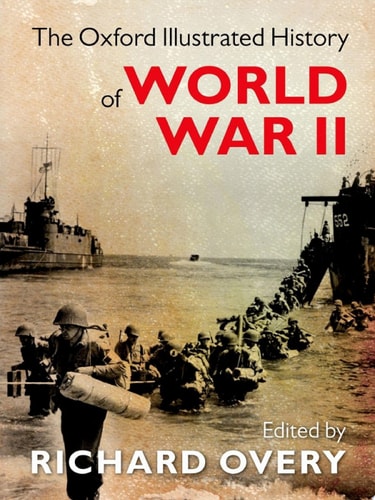
The Oxford Illustrated History of World War Two
0
0
As an Amazon Associate and affiliate partner, Menrva Books earns from qualifying purchases. Learn more
Author Description
World War Two was the most devastating conflict in recorded human history. It was both global in extent and total in character. It has understandably left a long and dark shadow across the decades. Yet it is three generations since hostilities formally ended in 1945 and the conflict is now a lived memory for only a few. And this growing distance in time has allowed historians to think differently about how to describe it, how to explain its course, and what subjects to focus on when considering the wartime experience. For instance, as World War Two recedes ever further into the past, even a question as apparently basic as when it began and ended becomes less certain. Was it 1939, when the war in Europe began? Or the summer of 1941, with the beginning of Hitler's war against the Soviet Union? Or did it become truly global only when the Japanese brought the USA into the war at the end of 1941? And what of the long conflict in East Asia, beginning with the Japanese aggression in China in the early 1930s and only ending with the triumph of the Chinese Communists in 1949? In The Oxford Illustrated History of World War Two a team of leading historians re-assesses the conflict for a new generation, exploring the course of the war not just in terms of the Allied response but also from the viewpoint of the Axis aggressor states. Under Richard Overy's expert editorial guidance, the contributions take us from the genesis of war, through the action in the major theatres of conflict by land, sea, and air, to assessments of fighting power and military and technical innovation, the economics of total war, the culture and propaganda of war, and the experience of war (and genocide) for both combatants and civilians, concluding with an account of the transition from World War to Cold War in the late 1940s. Together, they provide a stimulating and thought-provoking new interpretation of one of the most terrible and fascinating episodes in world history.
Menrva's Summary
THE THESIS
This volume investigates how the passage of time and shifting historical perspectives have altered our understanding of the origins, scope, and legacy of the Second World War. Edited by Richard Overy, a prominent historian of the Third Reich and aerial warfare, the text assembles a team of scholars to re-evaluate the conflict. By moving beyond traditional Allied-centric narratives, the contributors analyze the war as a truly global phenomenon, incorporating the perspectives of Axis powers and the extended timeline of conflicts in East Asia.
THE SCOPE MAP
What You Will Find
- Comprehensive analysis of major military theaters across land, sea, and air.
- Examination of the economics of total war and technological innovation.
- Cultural studies regarding propaganda and the civilian experience of genocide.
- Transitions from wartime mobilization to the onset of the Cold War.
Scope Limits
- The text does not provide a minute-by-minute tactical account of every individual battle.
- It focuses on thematic and structural re-interpretation rather than exhaustive biographical profiles of every political leader.
THE AUTHORITY PERSPECTIVE
Experts recognize this work as a significant synthesis that updates the historiography of the conflict for a contemporary audience. Readers frequently note the academic density of the prose and the high quality of the visual documentation provided throughout the chapters.
Page Count:
504
Publication Date:
2015-01-01
Publisher:
OUP Oxford
ISBN-10:
019104539X
ISBN-13:
9780191045394
Non-Fiction
History
20th Century
Military History
World War
Community Tags
Similar Books