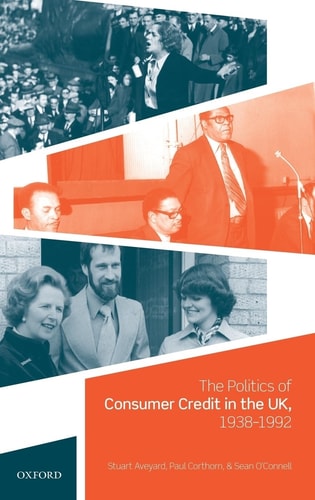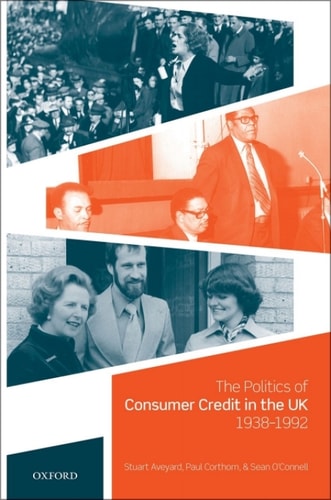
The Politics of Consumer Credit in the UK, 1938-1992
0
0
As an Amazon Associate and affiliate partner, Menrva Books earns from qualifying purchases. Learn more
Author Description
As early as the 1930s, Britain had a highly innovative and profitable mortgage sector that promoted a major extension in home ownership. These controversial and risky offerings had an equivalent in numerous hire purchase agreements, with which new homes were furnished. Such developments were forerunners of the 'easy credit' regime more commonly associated with the 1980s. Taking a long-term perspective on this issue indicates that Britain's departure from European models of consumer credit markets was not simply a by-product of neoliberalism's influence on the Thatcher administration, and this book offers a much fuller explanation to the phenomenon. It explores debates within and between the major political parties; reveals the infighting amongst civil service departments over management of consumer demand; charts the varying degrees of influence wielded by the Bank of England and finance capital, as opposed to that of consumer durable manufacturers; reviews the perspectives of consumers and their representatives; and explains the role of contingency and path dependency in these historical events. The central focus of this book is on consumer credit, but this subject provides a case study through which to explore numerous other important areas of British history. These include debates on the issues of post-war consensus, the impact of rising home ownership and its impact on consumer credit and personal finance markets, the management of consumer society, political responses to affluence, the development of consumer protection policy, and the influence of neoliberalism.
Menrva's Summary
THE THESIS
This book investigates the historical evolution of consumer credit in the United Kingdom between 1938 and 1992 to determine why Britain diverged from European credit models. The authors, Paul Corthorn, Sean O'Connell, and Stuart Aveyard, utilize archival research and political analysis to argue that the development of the British credit regime was not merely a result of Thatcher-era neoliberalism. Instead, they present a framework that emphasizes the roles of political party debates, civil service infighting, and the influence of financial institutions and manufacturers over several decades.
THE SCOPE MAP
What You Will Find
- Analysis of the growth of the mortgage sector and hire purchase agreements from the 1930s onward.
- Examination of the influence exerted by the Bank of England and consumer durable manufacturers on economic policy.
- Review of the development of consumer protection policies and the management of consumer demand.
Scope Limits
- The study is geographically confined to the United Kingdom.
- The analysis concludes in 1992, excluding subsequent developments in the digital credit era.
THE AUTHORITY PERSPECTIVE
Experts identify this work as a significant contribution to the understanding of British economic history and the political management of consumer society. Readers frequently note the academic density of the prose, which provides a rigorous examination of the intersection between political policy and personal finance.
Page Count:
272
Publication Date:
2018-01-01
Publisher:
OUP Oxford
ISBN-10:
0191046108
ISBN-13:
9780191046100
History
Economics
Finance
Great Britain
European History
British History
Consumer Credit