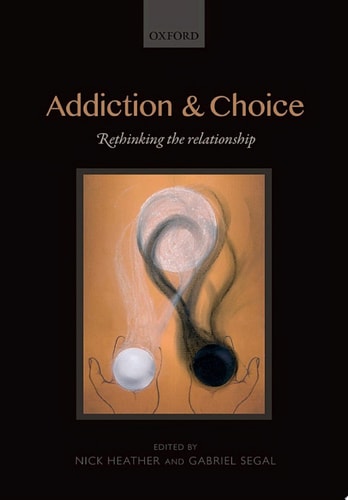
Addiction and Choice
0
0
As an Amazon Associate and affiliate partner, Menrva Books earns from qualifying purchases. Learn more
Author Description
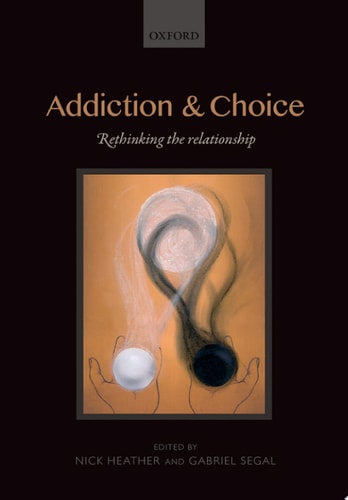
The Central Problem In The Study Of Addiction Is To Explain Why People Repeatedly Behave In Ways They Know Are Bad For Them. For Much Of The Previous Century And Until The Present Day, The Majority Of Scientific And Medical Attempts To Solve This Problem Were Couched In Terms Of Involuntary Behaviour; If People Behave In Ways They Do Not Want, Then This Must Be Because The Behaviour Is Beyond Their Control And Outside The Realm Of Choice. An Opposing Tradition, Which Finds Current Support Among Scientists And Scholars As Well As Members Of The General Public, Is That So-called Addictive Behavior Reflects An Ordinary Choice Just Like Any Other And That The Concept Of Addiction Is A Myth. The Editors And Authors Of This Book Tend To Take Neither View. There Has Been An Increasing Recognition In Recent Literature On Addiction That Restricting Possible Conceptions Of It To Either Of These Extreme Positions Is Unhelpful And Is Retarding Progress On Understanding The Nature Of Addiction And What Could Be Done About It. This Book Contains A Range Of Views From Philosophy, Neuroscience, Psychiatry, Psychology And The Law On What Exactly This Middle Ground Between Free Choice And No Choice Consists Of And What Its Implications Are For Theory, Practice And Policy On Addiction. The Result Amounts To A Profound Change In Our Thinking On Addiction And How Its Devastating Consequences Can Be Ameliorated. Addiction And Choice Is A Thought Provoking New Volume For All Those With An Interest In This Global Issue.
Menrva's Summary
THE THESIS
This volume investigates the nature of addiction by challenging the binary opposition between involuntary disease models and the view that addictive behavior is merely a matter of ordinary choice. Editors Gabriel Segal and Nick Heather assemble a multidisciplinary team of experts to explore a middle ground, arguing that current extreme positions hinder scientific progress and effective policy development. By integrating perspectives from philosophy, neuroscience, psychiatry, psychology, and law, the contributors seek to redefine addiction as a complex phenomenon that requires a more nuanced conceptual framework.
THE SCOPE MAP
What You Will Find
- Philosophical inquiries into the nature of agency and control in addictive states
- Neuroscientific and psychological evidence regarding behavioral regulation
- Legal and policy implications of viewing addiction as a spectrum of choice
- Interdisciplinary synthesis of clinical and theoretical research
Scope Limits
- Does not provide a singular, unified theory of addiction
- Does not offer a clinical treatment manual or recovery program
THE AUTHORITY PERSPECTIVE
Experts and scholars in the field of addiction studies recognize this work as a significant contribution to the ongoing debate regarding the nature of human agency. Readers frequently note the academic density of the prose, which serves as a rigorous resource for professionals and students interested in the intersection of science, law, and ethics.
Page Count:
512
Publication Date:
2016-01-01
Publisher:
Oxford University Press
ISBN-10:
0191040045
ISBN-13:
9780191040047
Psychology
Philosophy
Psychiatry
Addiction Studies
Public Policy
Neuroscience
Community Tags
Similar Books