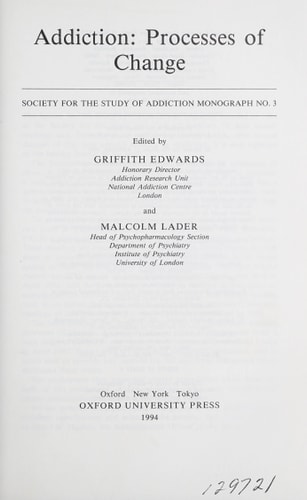
Addiction: Processes of Change
0
0
As an Amazon Associate and affiliate partner, Menrva Books earns from qualifying purchases. Learn more
Author Description
Addiction may be perceived as a progressive disease, or as an adaptation of key neuroreceptors, depending on the viewpoint of the observer. Factors influencing changes in addictive behavior may have a psychological and/or pharmacological basis. Innovation, changes in personal ideology and intention, changes in personal relationships, and socio-economics and legal factors each play a role in the changing use of addictive substances. This book addresses the many processes of change affecting substance abuse from a multidisciplinary perspective. It results from a meeting organized by the Society for the Study of Addiction in 1992, with further invited contributions.
Menrva's Summary
THE THESIS
This monograph investigates the multifaceted mechanisms that drive change in addictive behaviors, questioning whether addiction is best understood as a progressive disease or a neurobiological adaptation. Edited by Griffith Edwards and Malcolm H. Lader, the text synthesizes contributions from a 1992 Society for the Study of Addiction symposium. It presents a multidisciplinary framework that integrates psychological, pharmacological, and socio-economic variables to explain how and why individuals alter their substance use patterns over time.
THE SCOPE MAP
What You Will Find
- Analysis of neuroreceptor adaptation and pharmacological influences on substance use.
- Examination of psychological shifts, including personal ideology and intention.
- Evaluation of socio-economic and legal factors impacting addiction recovery.
- Multidisciplinary perspectives on the transition from active addiction to change.
Scope Limits
- The text focuses primarily on research and theories available up to the early 1990s.
- It does not provide a clinical treatment manual or a step-by-step recovery guide for patients.
THE AUTHORITY PERSPECTIVE
Experts recognize this volume as a significant academic resource for understanding the theoretical underpinnings of addiction recovery processes. Readers frequently note the academic density of the prose, which is tailored for researchers and clinicians rather than a general audience.
Page Count:
288
Publication Date:
1995-01-19
Publisher:
Oxford University Press
ISBN-10:
0192624334
ISBN-13:
9780192624338
Psychology
Sociology
Neuroscience
Public Health
Addiction Studies
Community Tags
Similar Books