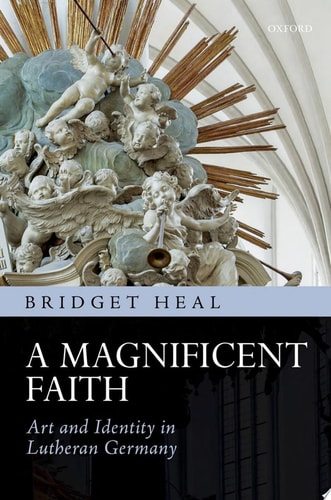
A Magnificent Faith
0
0
As an Amazon Associate and affiliate partner, Menrva Books earns from qualifying purchases. Learn more
Author Description
A Magnificent Faith Explains How And Why Lutheranism - A Confession That Derived Its Significance From The Promulgation Of God's Word - Became A Visually Magnificent Faith, A Faith Whose Adherents Sought To Captivate Christians' Hearts And Minds Through Seeing As Well As Through Hearing. Although Protestantism Is No Longer Understood As An Exclusively Word-based Religion, The Paradigm Of Evangelical Ambivalence Towards Images Retains Its Power. This Is The First Study To Offer An Account Of The Reformation Origins And Subsequent Flourishing Of The Lutheran Baroque, Of The Rich Visual Culture That Developed In Parts Of The Holy Roman Empire During The Later Seventeenth And Early Eighteenth Centuries. The Volume Opens With A Discussion Of The Legacy Of The Wittenberg Reformation. Three Sections Then Focus On The Confessional, Devotional, And Magnificent Image, Exploring Turning Points In Lutherans' Attitudes Towards Religious Art. Drawing On A Wide Variety Of Archival, Printed, And Visual Sources From Two Of The Empire's Most Important Protestant Territories - Saxony, The Heartland Of The Reformation, And Brandenburg - A Magnificent Faith Shows The Extent To Which Lutheran Culture Was Shaped By Territorial Divisions. It Traces The Development Of A Theologically-grounded Aesthetic, And Argues That Images Became Prominent Vehicles For The Articulation Of Lutheran Identity Not Only Amongst Theologians But Also Amongst Laymen And Women. By Examining The Role Of Images In The Lutheran Tradition As It Developed Over The Course Of Two Centuries, A Magnificent Faith Offers A New Understanding Of The Relationship Between Protestantism And The Visual Arts.
Menrva's Summary
THE THESIS
This work investigates how and why Lutheranism, a confession rooted in the primacy of the Word, evolved into a visually opulent faith that utilized art to engage the hearts and minds of its adherents. Bridget Heal, a scholar of early modern European history, utilizes archival, printed, and visual evidence from the Holy Roman Empire to challenge the long-standing paradigm that Protestantism was an exclusively word-based religion. She argues that the Lutheran Baroque emerged as a sophisticated, theologically-grounded aesthetic that served as a primary vehicle for articulating religious identity among both clergy and laity.
THE SCOPE MAP
What You Will Find
- Analysis of the Lutheran Baroque in Saxony and Brandenburg during the 17th and 18th centuries.
- Examination of the transition from the Wittenberg Reformation to the development of a distinct visual culture.
- Investigation into how territorial divisions within the Holy Roman Empire influenced aesthetic choices.
- Discussion of the role of religious art in shaping confessional, devotional, and public identity.
Scope Limits
- The study focuses primarily on specific territories within the Holy Roman Empire rather than a global survey of Lutheran art.
- The analysis is restricted to the period spanning the Reformation origins through the early 18th century.
THE AUTHORITY PERSPECTIVE
Scholars and historians identify this text as a significant contribution to the study of Protestant visual culture, noting its success in dismantling the myth of iconoclastic uniformity. Readers frequently highlight the depth of the archival research and the clarity with which the author connects theological shifts to material artistic production.
Page Count:
336
Publication Date:
2017-01-01
Publisher:
Oxford University Press
ISBN-10:
0191057541
ISBN-13:
9780191057540
History
Religion
Art History
Protestant Reformation
Lutheranism
European History
Community Tags
Similar Books