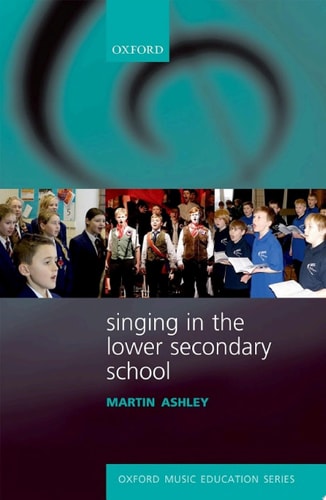
Singing in the Lower Secondary School
0
0
As an Amazon Associate and affiliate partner, Menrva Books earns from qualifying purchases. Learn more
Author Description
This is an essential text on an important area of the music curriculum consistently judged weak or inadequate by school inspectors in Britain. It covers social, physiological, musical, and pedagogical aspects of young adolescent singing, with focus on Key Stage 3 (ages 11-14) and the progression from primary school. Grounded in extensive research and authoritatively written, it uses case studies to illustrate best practice, and introduces the principles of cambiata, a dedicated approach to the adolescent voice. Other chapters contain practical and proven advice on repertoire, technique, and the motivation of reluctant singers, boosting the confidence of teachers for whom choral work is not the main specialism.
Menrva's Summary
THE THESIS
This book investigates the pedagogical and physiological challenges of teaching singing to students in lower secondary school, specifically addressing the decline in vocal engagement during early adolescence. Martin Ashley, an expert in music education, synthesizes research on the changing adolescent voice with practical classroom strategies. The text argues that by understanding the physiological shifts of the cambiata voice and implementing targeted pedagogical approaches, educators can improve the quality and inclusivity of choral programs in Key Stage 3 environments.
THE SCOPE MAP
What You Will Find
- Analysis of the physiological development of the adolescent voice
- Principles of the cambiata approach for changing voices
- Practical strategies for repertoire selection and vocal technique
- Methods for motivating reluctant singers in a classroom setting
- Case studies illustrating successful choral practices
Scope Limits
- Focus is primarily restricted to the British Key Stage 3 curriculum (ages 11-14)
- Does not cover advanced conservatory-level vocal training or solo performance techniques
THE AUTHORITY PERSPECTIVE
Educators and music specialists frequently cite this work as a foundational resource for addressing the specific vocal needs of early adolescents. Experts highlight the text for its ability to translate complex physiological research into actionable classroom strategies for non-specialist teachers.
Page Count:
226
Publication Date:
2015-01-01
Publisher:
OUP Oxford
ISBN-10:
0191057967
ISBN-13:
9780191057960
Choral Music
Music Technology
Pedagogy
Vocal Training
Secondary Education
Instruction & Study
School music
Music Education
Humanities
Community Tags
Other Editions(3)


Similar Books