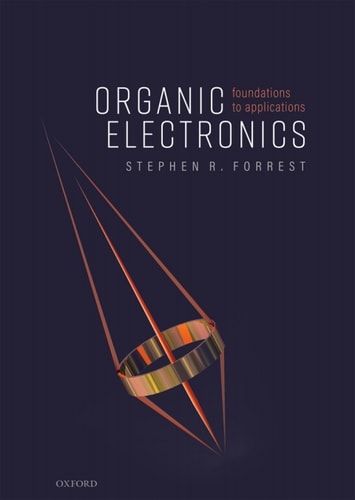
Organic Electronics: Foundations to Applications
0
0
As an Amazon Associate and affiliate partner, Menrva Books earns from qualifying purchases. Learn more
Author Description
This textbook provides a basic understanding of the principles of the field of organic electronics, through to their applications in organic devices. Useful for both students and practitioners, it is a teaching text as well as an invaluable resource that serves as a jumping-off point for those interested in learning, working and innovating in this rapidly growing field. Organics serve as a platform for very low cost and high performance optoelectronic and electronic devices that cover large areas, are lightweight, and can be both flexible and conformable to fit onto irregularly shaped surfaces such as foldable smart phones. Organic electronics is at the core of the global organic light emitting device (OLED) display industry. OLEDs also have potential uses as lighting sources. Other emerging organic electronic applications include organic solar cells, and organic thin film transistors useful in medical and a range of other sensing, memory and logic applications. This book is a product of both one and two semester courses that have been taught over a period of more than two decades. It is divided into two sections. Part I, Foundations, lays down the fundamental principles of the field of organic electronics. It is assumed that the reader has an elementary knowledge of quantum mechanics, and electricity and magnetism. A background knowledge of organic chemistry is not required. Part II, Applications, focuses on organic electronic devices. It begins with a discussion of organic thin film deposition and patterning, followed by chapters on organic light emitters, detectors, and thin film transistors. The last chapter describes several devices and phenomena that are not covered in the previous chapters, since they lie somewhat outside of the current mainstream of the field, but are nevertheless important.
Menrva's Summary
THE THESIS
This text investigates the fundamental physical principles governing organic electronics and their practical implementation in modern optoelectronic devices. Author Stephen R. Forrest, a prominent researcher in the field, synthesizes over two decades of pedagogical experience into a structured curriculum. The book provides a rigorous framework for understanding how organic materials function as semiconductors, bridging the gap between theoretical quantum mechanics and industrial application.
THE SCOPE MAP
What You Will Find
- Fundamental principles of organic semiconductors and charge transport
- Fabrication techniques including thin film deposition and patterning
- Analysis of OLEDs, organic solar cells, and thin film transistors
- Discussion of emerging sensing, memory, and logic applications
Scope Limits
- Does not provide an introduction to basic quantum mechanics or electromagnetism
- Does not require prior knowledge of organic chemistry
- Focuses primarily on mainstream device physics rather than niche experimental phenomena
THE AUTHORITY PERSPECTIVE
Experts recognize this work as a foundational pedagogical resource for students and practitioners entering the field of organic electronics. Readers frequently note the balance between theoretical depth and practical device application, making it a standard reference for those involved in display technology and semiconductor research.
Page Count:
1072
Publication Date:
2020-01-01
Publisher:
OUP Oxford
ISBN-10:
0191053562
ISBN-13:
9780191053566
Science
Electronics
textbook
Physics
Technology
Engineering
Professional Career & Trade
Community Tags
Similar Books