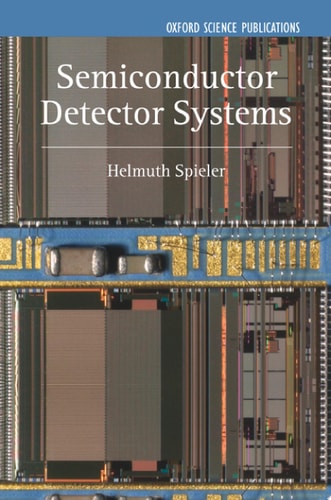
Semiconductor Detector Systems
0
0
As an Amazon Associate and affiliate partner, Menrva Books earns from qualifying purchases. Learn more
Author Description
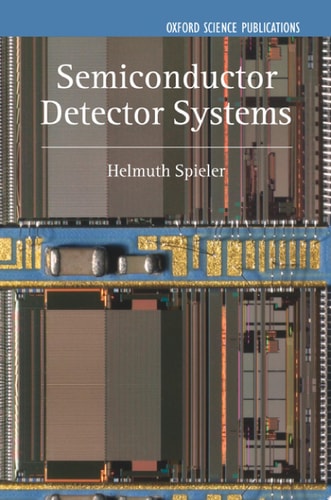
Semiconductor sensors patterned at the micron scale combined with custom-designed integrated circuits have revolutionized semiconductor radiation detector systems. Designs covering many square meters with millions of signal channels are now commonplace in high-energy physics and the technology is finding its way into many other fields, ranging from astrophysics to experiments at synchrotron light sources and medical imaging. This book is the first to present a comprehensive discussion of the many facets of highly integrated semiconductor detector systems, covering sensors, signal processing, transistors and circuits, low-noise electronics, and radiation effects. The diversity of design approaches is illustrated in a chapter describing systems in high-energy physics, astronomy, and astrophysics. Finally a chapter "Why things don't work" discusses common pitfalls. Profusely illustrated, this book provides a unique reference in a key area of modern science.
Menrva's Summary
THE THESIS
This book investigates the technical integration of micron-scale semiconductor sensors with custom-designed circuits to optimize radiation detector performance. Helmuth Spieler, a recognized expert in the field, synthesizes decades of development in high-energy physics instrumentation to provide a unified framework for designing complex detector systems. The text bridges the gap between sensor physics and electronic signal processing, offering a systematic approach to building large-scale, low-noise detection arrays.
THE SCOPE MAP
What You Will Find
- Comprehensive analysis of sensor physics and integrated circuit design
- Methodologies for low-noise signal processing and amplification
- Examination of radiation effects on semiconductor materials and electronics
- Comparative study of detector applications in high-energy physics, astrophysics, and medical imaging
Scope Limits
- Does not cover basic semiconductor physics at an introductory undergraduate level
- Excludes detailed software-level data acquisition algorithms
THE AUTHORITY PERSPECTIVE
Experts and researchers frequently cite this work as a foundational reference for the design of large-scale radiation detection systems. Readers often note the high technical density of the prose, which is tailored specifically for physicists and electrical engineers working in experimental instrumentation.
Page Count:
489
Publication Date:
2005-01-01
Publisher:
OUP Oxford
ISBN-10:
0191523658
ISBN-13:
9780191523656
Science
Radiation Detection
Professional Career & Trade
Electronics
Physics
Semiconductors
Engineering