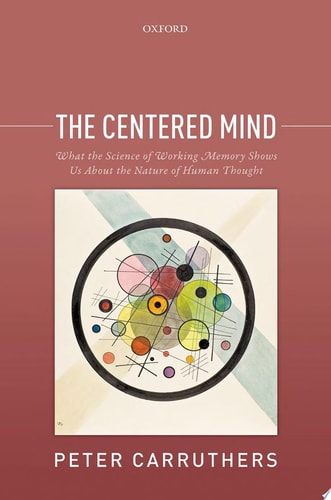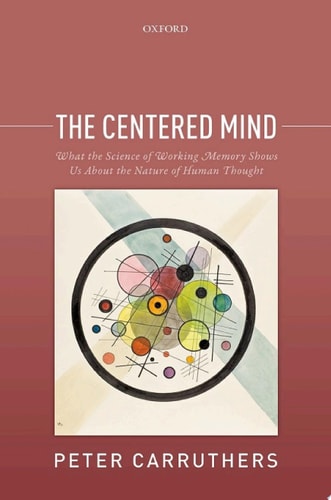
The Centered Mind: What the Science of Working Memory Shows Us About the Nature of Human Thought
0
0
As an Amazon Associate and affiliate partner, Menrva Books earns from qualifying purchases. Learn more
Author Description
The Centered Mind offers a new view of the nature and causal determinants of both reflective thinking and, more generally, the stream of consciousness. Peter Carruthers argues that conscious thought is always sensory-based, relying on the resources of the working-memory system. This system has been much studied by cognitive scientists. It enables sensory images to be sustained and manipulated through attentional signals directed at midlevel sensory areas of the brain. When abstract conceptual representations are bound into these images, we consciously experience ourselves as making judgments or arriving at decisions. Thus one might hear oneself as judging, in inner speech, that it is time to go home, for example. However, our amodal (non-sensory) propositional attitudes are never actually among the contents of this stream of conscious reflection. Our beliefs, goals, and decisions are only ever active in the background of consciousness, working behind the scenes to select the sensory-based imagery that occurs in working memory. They are never themselves conscious. Drawing on extensive knowledge of the scientific literature on working memory and related topics, Carruthers builds an argument that challenges the central assumptions of many philosophers. In addition to arguing that non-sensory propositional attitudes are never conscious, he also shows that they are never under direct intentional control. Written with his usual clarity and directness, The Centered Mind will be essential reading for all philosophers and cognitive scientists interested in the nature of human thought processes.
Menrva's Summary
THE THESIS
This book investigates the nature of conscious thought by examining the causal role of the working-memory system in human cognition. Peter Carruthers, a philosopher specializing in cognitive science, argues that conscious experience is exclusively sensory-based. He posits that while abstract propositional attitudes like beliefs and goals drive our thinking, they remain unconscious, operating behind the scenes to manipulate sensory imagery within the working-memory system.
THE SCOPE MAP
What You Will Find
- Analysis of the working-memory system and its interaction with midlevel sensory brain areas
- A theoretical framework distinguishing between conscious sensory imagery and unconscious propositional attitudes
- Arguments regarding the lack of direct intentional control over non-sensory mental states
Scope Limits
- Does not provide a comprehensive clinical guide to memory improvement or cognitive training
- Does not address the full spectrum of emotional or affective states outside of cognitive judgment
THE AUTHORITY PERSPECTIVE
Experts and philosophers in the field of cognitive science recognize this work as a significant challenge to traditional views on the accessibility of propositional attitudes. Readers frequently note the academic density of the prose and the rigorous reliance on empirical literature regarding brain function.
Page Count:
304
Publication Date:
2015-01-01
Publisher:
OUP Oxford
ISBN-10:
0191059005
ISBN-13:
9780191059001
Philosophy
Psychology
Non-Fiction
Neuroscience
Critical thinking
Consciousness
Community Tags
Similar Books