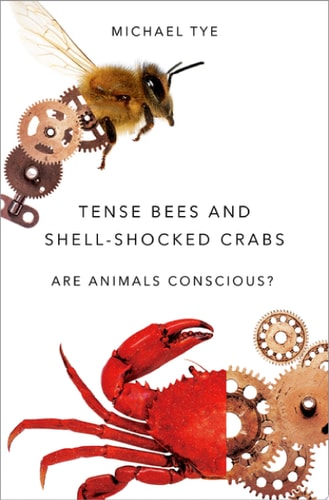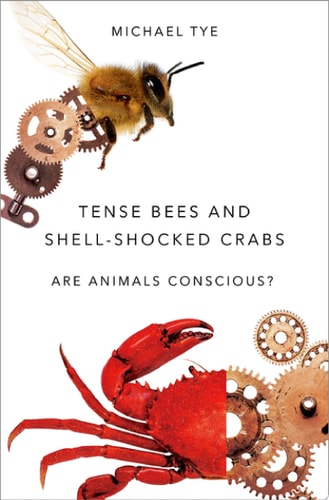
Tense Bees and Shell-Shocked Crabs
0
0
As an Amazon Associate and affiliate partner, Menrva Books earns from qualifying purchases. Learn more
Author Description
A Consideration Of Some Of The Most Common Questions About Animal Minds. Do Birds Have Feelings? Can Fish Feel Pain? Could A Honeybee Be Anxious? For Centuries, The Question Of Whether Or Not Animals Are Conscious Like Humans Has Prompted Debates Among Philosophers And Scientists. While Most People Gladly Accept That Complex Mammals - Such As Dogs - Share Emotions And Experiences With Us, The Matter Of Simpler Creatures Is Much Less Clear. Meanwhile, The Advent Of The Digital Age And Artificial Intelligence Has Created An Added Dimension To Questions About Non-human Consciousness. In Tense Bees And Shell-shocked Crabs, Michael Tye Offers Answers To Some Of Today's Most Pressing Questions About Nonhuman Consciousness. Blending The Latest Research About Animal Sensation With Theories About The Nature Of Consciousness, Tye Develops A Methodology For Addressing The Mysteries Of The Animal Mind. Without Endorsing Any Specific Theory On The Nature Of Consciousness, Tye Tackles Issues Such As The Animal Experience Of Pain And Fear, And The Role Of Brain Anatomy In Determining Consciousness. He Then Turns His Attention To The Artificial Realm, Considering Whether Complex Robots Could Ever Be Considered Conscious. Tye Concludes With A Discussion Of How, If We Consider Animals Conscious, This Might Impact Our Ethical Obligations To Them. From Insects To Crabs, Fish To Birds, Tense Bees And Shell-shocked Crabs Offers An Insightful Exploration Of The Ways In Which Animals Relate To The World. Tense Bees And Shell-shocked Crabs Will Appeal To Students And Scholars Of Philosophy And Neuroscience, As Well As General Readers With An Interest In Animal And Environmental Ethics.
Menrva's Summary
THE THESIS
This book investigates the criteria for consciousness in non-human animals and artificial systems, questioning whether simple creatures possess subjective experiences. Michael Tye, a philosopher specializing in the philosophy of mind, synthesizes current neuroscientific research and philosophical theories to establish a framework for evaluating animal sentience. He argues that understanding the nature of consciousness requires moving beyond anthropocentric assumptions to examine the biological and functional realities of diverse species. By applying this methodology, Tye addresses the ethical implications of attributing consciousness to non-human entities.
THE SCOPE MAP
What You Will Find
- Analysis of pain and fear responses in insects, crustaceans, fish, and birds
- A comparative framework for evaluating brain anatomy versus behavioral output
- Philosophical inquiry into the potential for consciousness in artificial intelligence and complex robots
- Ethical considerations regarding human obligations toward non-human species
Scope Limits
- Does not endorse a single, unified theory of consciousness
- Does not provide a definitive biological proof for the subjective experience of every species mentioned
THE AUTHORITY PERSPECTIVE
Experts and readers recognize this work as a bridge between technical philosophy of mind and accessible science writing. The text is noted for its balanced approach, providing enough academic rigor for scholars while remaining readable for those interested in animal ethics.
Page Count:
256
Publication Date:
2016-01-01
Publisher:
Oxford University Press
ISBN-10:
0190278021
ISBN-13:
9780190278021
Science
Philosophy
Neuroscience
Animal Ethics
Consciousness
Community Tags
Similar Books