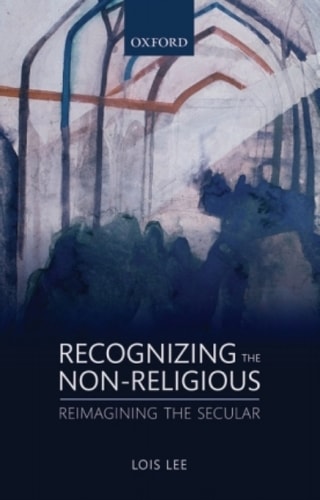
Recognizing the Non-religious: Reimagining the Secular
0
0
As an Amazon Associate and affiliate partner, Menrva Books earns from qualifying purchases. Learn more
Author Description
In recent years, the extent to which contemporary societies are secular has come under scrutiny. At the same time, many countries, especially in Europe, have increasingly large nonaffiliate, 'subjectively secular' populations, whilst nonreligious cultural movements like the New Atheism and the Sunday Assembly have come to prominence. Making sense of secularity, irreligion, and the relationship between them has therefore emerged as a crucial task for those seeking to understand contemporary societies and the nature of modern life. Drawing on ethnographic fieldwork in southeast England, Recognizing the Non-religious develops a new vocabulary, theory and methodology for thinking about the secular. It distinguishes between separate and incommensurable aspects of so-called secularity as insubstantial--involving merely the absence of religion--and substantial--involving beliefs, ritual practice, and identities that are alternative to religious ones. Recognizing the cultural forms that present themselves as non-religious therefore opens up new, more egalitarian and more theoretically coherent ways of thinking about people who are 'not religious'. It is also argued that recognizing the nonreligious allows us to reimagine the secular itself in new and productive ways. This book is part of a fast-growing area of research that builds upon and contributes to theoretical debates concerning secularization, 'desecularization', religious change, postsecularity and postcolonial approaches to religion and secularism. As well as presenting new research, this book gathers insights from the wider studies of nonreligion, atheism, and secularism in order to consolidate a theoretical framework, conceptual foundation and agenda for future research.
Menrva's Summary
THE THESIS
This book investigates how contemporary societies can better define and understand the non-religious population through a new theoretical and methodological framework. Lois Lee, a researcher in the sociology of religion, utilizes ethnographic fieldwork conducted in southeast England to challenge traditional binary understandings of secularity. She argues that the non-religious experience is not merely an absence of faith but a substantial identity involving its own beliefs, rituals, and cultural practices.
THE SCOPE MAP
What You Will Find
- Ethnographic data from southeast England regarding non-religious identities
- A new vocabulary and methodology for analyzing secularity
- Theoretical distinctions between insubstantial and substantial secularity
- Synthesis of current debates on postsecularity and religious change
Scope Limits
- The study is geographically confined to southeast England
- It does not provide a global survey of irreligion across all cultural contexts
THE AUTHORITY PERSPECTIVE
Experts identify this work as a foundational text for scholars examining the sociology of non-religion and secularism. Readers frequently note the academic density of the prose, which is intended for researchers and students of religious studies.
Page Count:
224
Publication Date:
2015-01-01
Publisher:
OUP Oxford
ISBN-10:
0191056650
ISBN-13:
9780191056659
Religion
Great Britain
American Religions
Irreligion
Anthropology
Secularism
Atheism
Sociology