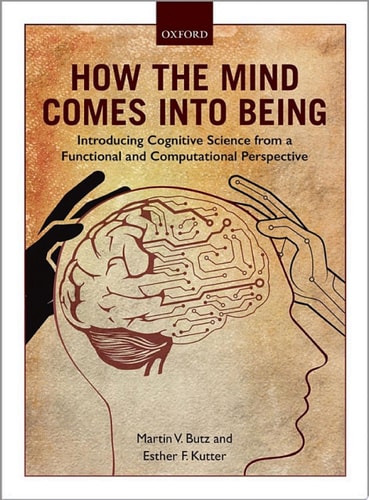
How the Mind Comes into Being: Introducing Cognitive Science from a Functional and Computational Perspective
0
0
As an Amazon Associate and affiliate partner, Menrva Books earns from qualifying purchases. Learn more
Author Description
More than 2000 years ago Greek philosophers were pondering the puzzling dichotomy between our physical bodies and our seemingly non-physical minds. Yet even today, it remains puzzling how our mind controls our body, and vice versa, how our body shapes our mind. How is it that we can think highly abstract thoughts, seemingly fully detached from the actual, physical reality? This book offers an interdisciplinary introduction to embodied cognitive science, addressing the question of how the mind comes into being while actively interacting with and learning from the environment by means of the own body. By pursuing a functional and computational perspective, concrete answers are provided about the fundamental mechanisms and developing structures that must bring the mind about, taking into account insights from biology, neuroscience, psychology, and philosophy as well as from computer science, machine learning, and artificial intelligence. The book provides introductions to the most important challenges and available computational approaches on how the mind comes into being. The book includes exercises, helping the reader to grasp the material and understand it in a broader context. References to further studies, methodological details, and current developments support more advanced studies beyond the covered material. While the book is written in advanced textbook style with the primary target group being undergraduates in cognitive science and related disciplines, readers with a basic scientific background and a strong interest in how the mind works will find this book intriguing and revealing.
Menrva's Summary
THE THESIS
This text investigates the fundamental mechanisms by which the human mind emerges from the interaction between physical bodies and their environments. Authors Esther F. Kutter and Martin V. Butz synthesize insights from biology, neuroscience, psychology, philosophy, and computer science to propose a functional and computational framework for understanding cognition.
THE SCOPE MAP
What You Will Find
- Computational models of embodied cognition and sensorimotor interaction
- Interdisciplinary synthesis of machine learning and biological neural processes
- Pedagogical exercises designed to reinforce theoretical concepts
- Overviews of current challenges in artificial intelligence and cognitive architecture
Scope Limits
- Does not provide an exhaustive history of philosophical dualism
- Does not cover clinical psychiatric applications or therapeutic interventions
THE AUTHORITY PERSPECTIVE
Experts identify this work as a structured, advanced textbook suitable for undergraduate students in cognitive science and related technical fields. Readers frequently note the academic density of the prose, which requires a foundational scientific background to fully comprehend the computational methodologies presented.
Page Count:
401
Publication Date:
2017-01-01
Publisher:
OUP Oxford
ISBN-10:
0191060178
ISBN-13:
9780191060175
Psychology
Philosophy of
Machine Learning
Neuroscience
Community Tags
Similar Books