The Cuban Missile Crisis
0
0
As an Amazon Associate and affiliate partner, Menrva Books earns from qualifying purchases. Learn more
Author Description
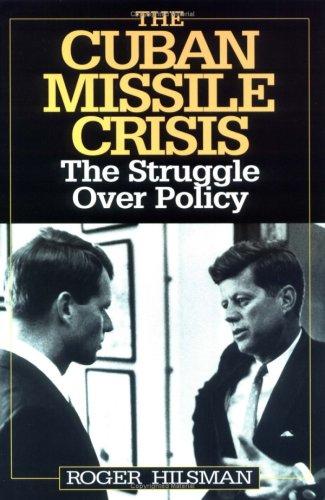
The world has never been as close to nuclear war as it was in November 1962. In this book, Roger Hilsman, head of intelligence at the U.S. State Department at that time, details the struggles that President Kennedy and his advisers went through to understand why the Soviet Union had deployed nuclear missiles in Cuba, describes the debate over alternative policy choices to force the removal of the missiles, and determines how and why each particular course of action was eventually chosen. He relates how the U.S. government dealt with the public and with its allies, and traces the step-by-step negotiations between the Soviets and the United States. In his discussion, Hilsman reveals how Khrushchev chose a back-channel, deniable way of communicating with President Kennedy by sending messages to the head of the KGB in Washington, who passed them to Hilsman, who then took them to the president. This book shows how President Kennedy and his brother Robert used this information to bring about the withdrawal of the missiles without war. This book analyzes the motives behind the massive Soviet deployment of nuclear missiles to Cuba, which were capable of destroying every major city in the United States except Seattle, backed up by anti-aircraft and ground forces to defend those missiles. One ship could carry 20-to-30 freight-train loads of war material and over 100 shiploads were sent - a total of between 2,000 and 3,000 train loads. Hilsman tells the story of how American intelligence found out - just in time - and, in a postmortem, addresses the question of U.S. success and/or failure. He concludes with an assessment of the significance of the only nuclear crisis in the world's history, pointing out the lessons for humankind about war in a nuclear age.
Menrva's Summary
THE THESIS
The world teetered on the brink of nuclear annihilation during the Cuban Missile Crisis of October 1962. Roger Hilsman, then head of intelligence at the U.S. State Department, provides an insider's account of this pivotal moment, detailing the intense efforts to comprehend the Soviet Union's motivations for deploying nuclear missiles in Cuba. The book dissects the critical debates among President Kennedy's advisors regarding policy choices and explains the rationale behind the eventual decisions made to de-escalate the crisis and secure the removal of the missiles.
THE SCOPE MAP
- Analysis of the Soviet Union's motives for deploying nuclear missiles in Cuba, capable of striking major U.S. cities.
- Detailed account of the U.S. government's internal deliberations and policy debates concerning the crisis.
- Description of how the U.S. managed public perception and international alliances during the standoff.
- Step-by-step tracing of the negotiations between the Soviet Union and the United States.
- Revelation of Khrushchev's use of back-channel communications via the KGB head in Washington.
- Explanation of how President Kennedy and Robert Kennedy utilized intelligence to achieve missile withdrawal without war.
- Post-mortem analysis of U.S. intelligence successes and failures in detecting the deployment.
- Assessment of the significance of the crisis and its lessons for the nuclear age.
THE AUTHORITY PERSPECTIVE
Roger Hilsman's firsthand account offers a detailed examination of the Cuban Missile Crisis, drawing on his direct involvement as head of intelligence at the U.S. State Department. The book is recognized for its insider perspective on the decision-making processes and the complex negotiations that averted nuclear war. It provides a thorough analysis of the Soviet motivations and the strategic choices made by the Kennedy administration. The work is valued for its historical depth and its insights into crisis management during the Cold War.
Page Count:
162
Publication Date:
1996-01-01
ISBN-10:
0275954358
ISBN-13:
9780275954352
Non-Fiction
Politics
History
International relations
Community Tags
Similar Books