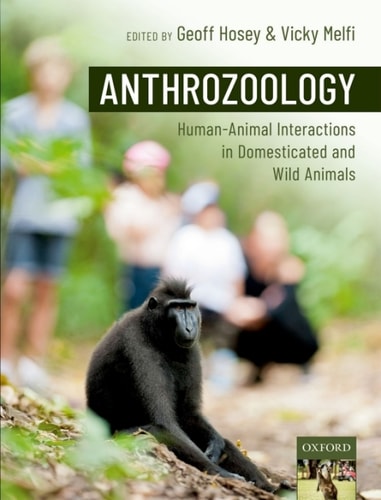
Anthrozoology: Human-Animal Interactions in Domesticated and Wild Animals
0
0
As an Amazon Associate and affiliate partner, Menrva Books earns from qualifying purchases. Learn more
Author Description
Anthrozoology, the study of human-animal interactions (HAIs), has experienced substantial growth during the past 20 years and it is now timely to synthesise what we know from empirical evidence about our relationships with both domesticated and wild animals. Two principal points of focus have become apparent in much of this research. One is the realisation that the strength of these attachments not only has emotional benefits for people, but confers health benefits as well, such that a whole area has opened up of using companion animals for therapeutic purposes. The other is the recognition that the interactions we have with animals have consequences for their welfare too, and thus impact on their quality of life. Consequently we now study HAIs in all scenarios in which animals come into contact with humans, whether as pets/companions, farm livestock, laboratory animals, animals in zoos, or in the wild. This topical area of study is of growing importance for animals in animal management, animal handling, animal welfare and applied ethology courses, and also for people within psychology, anthropology and human geography at both the undergraduate and postgraduate level. It will therefore be of interest to students, researchers, and animal managers across the whole spectrum of human-animal contact.
Menrva's Summary
THE THESIS
This text investigates the multifaceted nature of human-animal interactions (HAIs) and their reciprocal impacts on human health and animal welfare. Authors Geoff Hosey and Vicky Melfi synthesize two decades of empirical research to establish a framework for understanding how human-animal relationships function across diverse settings. By examining the psychological benefits for humans alongside the welfare implications for animals, the authors provide a comprehensive overview of the field for students and professionals alike.
THE SCOPE MAP
What You Will Find
- Empirical data on human-animal attachment and therapeutic outcomes
- Analysis of animal welfare in managed and wild environments
- Methodological approaches to studying HAIs in diverse contexts
Scope Limits
- Does not provide exhaustive clinical protocols for animal-assisted therapy
- Does not focus on the biological evolution of specific species outside of their interaction with humans
THE AUTHORITY PERSPECTIVE
Experts recognize this work as a foundational synthesis for students and researchers in applied ethology and related social sciences. Readers frequently note the clarity with which the authors bridge the gap between human psychology and animal management practices.
Page Count:
192
Publication Date:
2018-01-01
Publisher:
OUP Oxford
ISBN-10:
0191068063
ISBN-13:
9780191068065
Science
Psychology
Human Geography
Anthropology
Zoology
Animal Welfare
Applied Ethology
Human Relationships
Anthrozoology
Community Tags
Similar Books