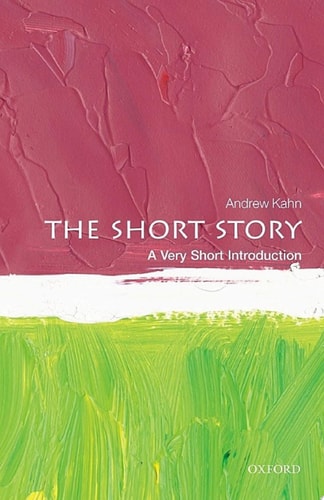
The Short Story: A Very Short Introduction
0
0
As an Amazon Associate and affiliate partner, Menrva Books earns from qualifying purchases. Learn more
Author Description
What defines a modern short story is much more than a question of length. Despite the efforts of early pioneers like Edgar Allan Poe, the genre was originally synonymous with the anecdote or tale and seen more as entertainment than art. However it has become far more than that, and this Very Short Introduction considers afresh the form's ongoing innovations in plot construction, capacity for psychological insight, and ability to offer intensely concentrated perceptions. This book charts the rise of the short story from its original appearance in magazines and newspapers, largely in the United States and Great Britain. For much of the nineteenth century, tales were written for the press, and the form's history is marked by engagement with popular fiction. From the later nineteenth century, the short story earned a reputation for its skillful use of plot design and character study distinct from the novel. After the First World War it found outlets in high-brow publications, and single-author collections, as well as anthologies, were regularly published. Exploring the form's techniques and themes, Andrew Kahn considers the continuity and variation in key structures and techniques such as the beginning, the creation of voice, the ironic turn or plot twist, and how writers manage endings. Throughout he draws on examples from an international and flourishing corpus of work, with close analysis of classic and lesser-known stories by American, Canadian, Irish, Australian, Russian, and French masters such as James Baldwin, Grace Paley, Alice Munro, Elizabeth Taylor, William Trevor, Helen Garner, Chekhov, and Guy de Maupassant.
Menrva's Summary
THE THESIS
This book investigates the evolution of the short story as a distinct literary form, questioning how it transcended its origins as mere anecdote to become a sophisticated medium for psychological insight and concentrated narrative. Andrew Kahn, a scholar of literature, utilizes a historical and formalist framework to analyze the development of the genre. He examines how the short story emerged from 19th-century periodical culture in the United States and Great Britain to become a globally recognized art form. The text argues that the genre's power lies in its unique structural constraints and its capacity for intense, compressed perception.
THE SCOPE MAP
What You Will Find
- A historical survey of the short story from 19th-century press origins to modern high-brow collections.
- Analysis of technical elements including narrative voice, plot construction, and the management of endings.
- Comparative studies of international authors including Chekhov, Alice Munro, James Baldwin, and Guy de Maupassant.
Scope Limits
- The text does not provide an exhaustive bibliography of every significant short story ever written.
- It focuses primarily on the Western tradition and specific international masters rather than a global survey of every cultural variation.
THE AUTHORITY PERSPECTIVE
Experts and readers frequently note the academic density of the prose, which manages to remain accessible for students and enthusiasts alike. It is widely regarded as a foundational text for those seeking a concise, scholarly overview of the mechanics and history of the short story form.
Page Count:
171
Publication Date:
2021-01-01
Publisher:
OUP Oxford
ISBN-10:
0191069671
ISBN-13:
9780191069673
Non-Fiction
English
Literary History
English & College Success
Reference
Literary Criticism
Academic
Community Tags
Similar Books