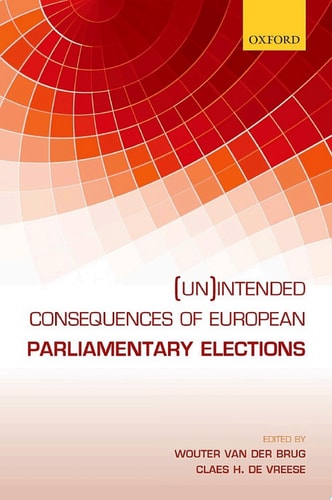
(Un)intended Consequences of EU Parliamentary Elections
0
0
As an Amazon Associate and affiliate partner, Menrva Books earns from qualifying purchases. Learn more
Author Description
When direct elections for the European Parliament were first organized in 1979, the idea was that such direct elections would increase the democratic legitimacy and accountability of the Parliament. Moreover, the elections were expected to raise public interest, engagement and support for the European project. Did these elections help to increase legitimacy and accountability? Did they increase interest in and support for the 'European project'? Or, did these elections have unintended (and perhaps undesirable) consequences? This volume focuses on the consequences of European elections for public debate and involvement, for party systems, and for public opinion. EP elections have caused a number of intended consequences: the salience of the elections in the media has gone up and over time electoral competition becomes more important, engaging in the campaign can help improve EU evaluations, and Europe as a topic has become more important for voting at EP elections, boosting the prevalence of so-called EU voting. A number of intended consequences have not materialized during the life of the EP so far: knowledge or turnout levels have not gone up and citizens have not become better at judging what political parties are offering. The EP elections have, however, also yielded a number of unintended consequences: EP elections dampen turnout for first time voters in subsequent elections, EP elections cause temporary decline in EU support, and the elections have become a strategic arena for political parties to position themselves on EU issues and for new movements and parties to boost or sustain their success.
Menrva's Summary
THE THESIS
This volume investigates whether direct elections for the European Parliament have successfully increased democratic legitimacy and public engagement or if they have produced unintended, potentially negative consequences for the European project. The authors, Claes H. de Vreese and Wouter van der Brug, utilize longitudinal data and comparative political analysis to evaluate the impact of these elections on party systems, media discourse, and public opinion. They present a framework that contrasts the original democratic expectations of the 1979 elections against the empirical outcomes observed over subsequent decades.
THE SCOPE MAP
What You Will Find
- Analysis of voter turnout trends and public knowledge levels regarding EU institutions.
- Examination of media salience and the role of European issues in electoral competition.
- Assessment of how political parties utilize EP elections as strategic arenas for positioning.
Scope Limits
- The text does not provide a comprehensive history of the European Parliament's legislative functions.
- It does not offer prescriptive policy recommendations for future electoral reform.
THE AUTHORITY PERSPECTIVE
Experts identify this work as a significant contribution to the study of European integration and electoral behavior. Readers frequently note the academic density of the prose and the rigorous empirical approach used to challenge common assumptions about democratic participation in the EU.
Page Count:
312
Publication Date:
2016-01-01
Publisher:
OUP Oxford
ISBN-10:
019107473X
ISBN-13:
9780191074738
Elections
European Union
European
Public Policy
International relations
Community Tags
Similar Books