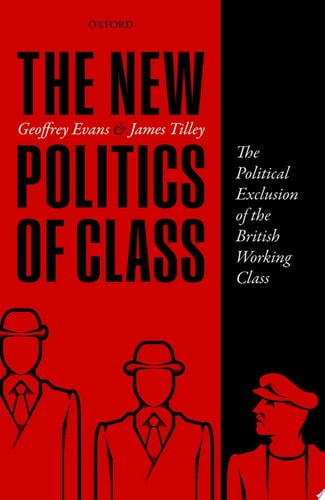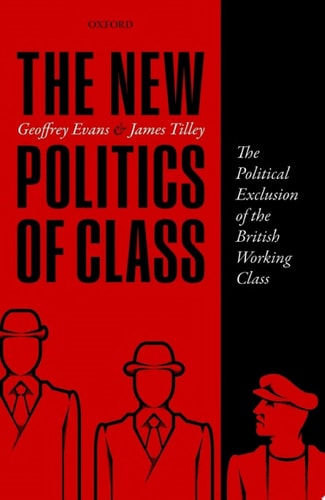
The New Politics of Class: The Political Exclusion of the British Working Class
0
0
As an Amazon Associate and affiliate partner, Menrva Books earns from qualifying purchases. Learn more
Author Description
This book explores the new politics of class in 21st century Britain. It shows how the changing shape of the class structure since 1945 has led political parties to change, which has both reduced class voting and increased class non-voting. This argument is developed in three stages. The first is to show that there has been enormous social continuity in class divisions. The authors demonstrate this using extensive evidence on class and educational inequality, perceptions of inequality, identity and awareness, and political attitudes over more than fifty years. The second stage is to show that there has been enormous political change in response to changing class sizes. Party policies, politicians' rhetoric, and the social composition of political elites have radically altered. Parties offer similar policies, appeal less to specific classes, and are populated by people from more similar backgrounds. Simultaneously the mass media have stopped talking about the politics of class. The third stage is to show that these political changes have had three major consequences. First, as Labour and the Conservatives became more similar, class differences in party preferences disappeared. Second, new parties, most notably UKIP, have taken working class voters from the mainstream parties. Third, and most importantly, the lack of choice offered by the mainstream parties has led to a huge increase in class-based abstention from voting. Working class people have become much less likely to vote. In that sense, Britain appears to have followed the US down a path of working class political exclusion, ultimately undermining the representativeness of our democracy. They conclude with a discussion of the Brexit referendum and the role that working class alienation played in its historic outcome.
Menrva's Summary
THE THESIS
This book investigates how the evolution of the British class structure since 1945 has resulted in the systemic political exclusion of the working class. The authors, Geoffrey Evans and James Robert Tilley, utilize extensive longitudinal data on social inequality, political attitudes, and party behavior to argue that the convergence of mainstream political parties has alienated working-class voters, leading to increased abstention and the rise of populist alternatives.
THE SCOPE MAP
What You Will Find
- Longitudinal analysis of British class divisions and educational inequality from 1945 to the present.
- Examination of shifts in party rhetoric, policy platforms, and the social composition of political elites.
- Quantitative evidence linking the lack of distinct political choice to class-based voter abstention.
- A case study on the role of working-class alienation in the outcome of the Brexit referendum.
Scope Limits
- The analysis is primarily focused on the British political landscape and does not provide a comparative study of other European parliamentary systems.
- The text does not offer prescriptive policy solutions for reversing the identified trends of political exclusion.
THE AUTHORITY PERSPECTIVE
Experts recognize this work as a rigorous empirical examination of the decline of class-based voting in Britain. Scholars frequently cite the authors' data-driven approach as a foundational resource for understanding the contemporary disconnect between mainstream political parties and the working-class electorate.
Page Count:
251
Publication Date:
2017-01-01
Publisher:
OUP Oxford
ISBN-10:
019251783X
ISBN-13:
9780192517838
Sociology
Elections
Working class
Class Studies
Democracy
British Politics
Great Britain
European
Community Tags
Similar Books