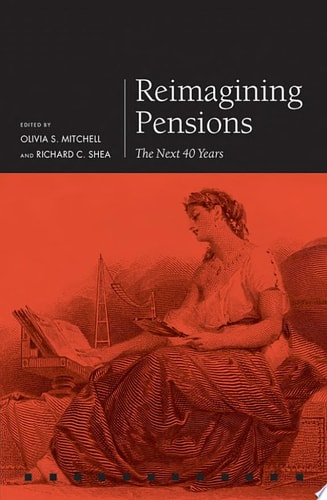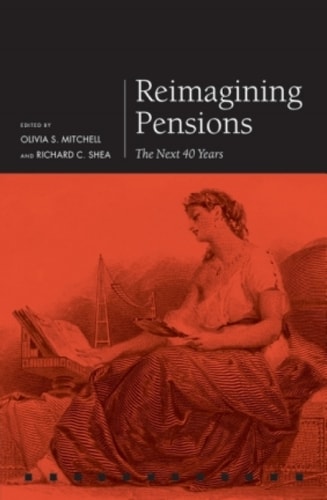
Reimagining Pensions: The Next 40 Years
0
0
As an Amazon Associate and affiliate partner, Menrva Books earns from qualifying purchases. Learn more
Author Description
The 1964 termination of the Studebaker Corporation's pension plan wiped out or significantly reduced the pensions of thousands of the automaker's employees and retirees. In response, the US Congress passed the 1974 Employee Retirement Income Security Act (ERISA), a monumental and revolutionary piece of legislation crafted to address corporate pension underfunding. The bill also set new rules regarding defined benefit (DB) and other retirement plans, and it established the Pension Benefit Guaranty Corporation as a government-run insurer to serve as a backdrop to U.S. corporate pensions. Despite the bill's far-ranging scope, in the decades since its passage, it has become evident that ERISA failed to achieve many of its intended objectives. The corporate pension scene today is in turmoil, and most private employers have terminated or frozen their traditional DB plans. In their place, employers are increasingly substituting defined contribution (DC) retirement saving plans, which pose a new set of responsibilities on employees and their firms. This volume investigates how and why traditional approaches to pension risk management have failed, and we also explore the new mechanisms required to strengthen retirement security for the future. Lessons from international experience are also included, ranging from Singapore to Switzerland, and the Netherlands to Australia.
Menrva's Summary
THE THESIS
This volume investigates the systemic failures of traditional pension risk management and proposes new mechanisms to ensure retirement security over the next four decades. Editors Olivia S. Mitchell and Richard C. Shea, both experts in pension research and policy, compile contributions from leading scholars to evaluate the shortcomings of the Employee Retirement Income Security Act (ERISA). The text argues that the shift from defined benefit to defined contribution plans necessitates a fundamental restructuring of how firms and employees manage long-term financial risk.
THE SCOPE MAP
What You Will Find
- Analysis of the historical impact of the 1974 ERISA legislation on corporate pension stability.
- Comparative studies of international retirement systems in Singapore, Switzerland, the Netherlands, and Australia.
- Evaluation of the transition from defined benefit to defined contribution retirement models.
Scope Limits
- The text does not provide individualized financial planning advice for personal retirement accounts.
- It does not cover the entirety of global social security systems, focusing primarily on corporate and private pension structures.
THE AUTHORITY PERSPECTIVE
Experts recognize this volume as a rigorous academic examination of the structural weaknesses inherent in current private pension frameworks. Readers frequently note the technical density of the prose, which makes it a specialized resource for policy analysts and financial researchers.
Page Count:
376
Publication Date:
2016-01-01
Publisher:
OUP Oxford
ISBN-10:
0191071609
ISBN-13:
9780191071607
Economics
Business
Law
Public Policy
Finance