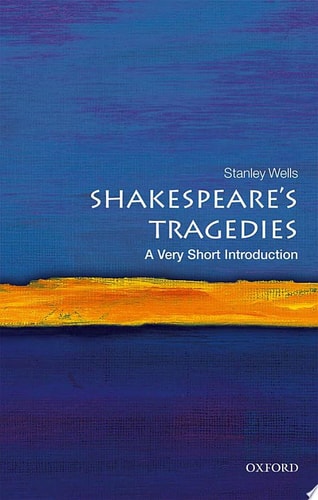
Shakespeare's Tragedies: A Very Short Introduction
0
0
As an Amazon Associate and affiliate partner, Menrva Books earns from qualifying purchases. Learn more
Author Description
Tragedy, including grief, pain and suffering, is a common theme in Shakespeare's plays, often leading to the death of at least one character, if not several. Yet such themes can also be found in Shakespearian plays which are classed as comedies, or histories. What is it which makes a Shakespearian tragedy, and what dramatic themes and conventions did the bard draw upon when writing them? In this Very Short Introduction Stanley Wells considers what is meant by the word 'tragedy', and discusses nine of Shakespeare's iconic tragic plays. He explores how the early definitions and theoretical discussions of the concept of tragedy in Shakespeare's time would have influenced these plays, along with the literary influence of Seneca. Wells also considers Shakespeare's uses of the word 'tragedy' itself, analysing whether he had any overall concept of the genre in relation to the drama, and looking at the ways in which the theatrical conventions of his time shaped his plays, such as the use of boy players in women's roles and the physical structures of the playhouses. Offering a critical analysis of each of the nine plays in turn, Wells concludes by discussing why tragedy is regarded as fit subject for entertainment, and what it is about tragic plays that audiences find so enjoyable. ABOUT THE SERIES: The Very Short Introductions series from Oxford University Press contains hundreds of titles in almost every subject area. These pocket-sized books are the perfect way to get ahead in a new subject quickly. Our expert authors combine facts, analysis, perspective, new ideas, and enthusiasm to make interesting and challenging topics highly readable.
Menrva's Summary
THE THESIS
This book investigates the defining characteristics of Shakespearean tragedy and the dramatic conventions that shaped the playwright's approach to the genre. Professor Stanley Wells, a renowned Shakespeare scholar, utilizes his extensive expertise to analyze the structural and thematic elements of nine iconic tragedies. He examines the historical context of Elizabethan drama, the influence of classical models like Seneca, and the practical constraints of the period's theater to construct a framework for understanding how Shakespeare conceptualized the tragic form.
THE SCOPE MAP
What You Will Find
- Analysis of nine major Shakespearean tragedies
- Examination of Elizabethan theatrical conventions and physical playhouse structures
- Discussion of the influence of Senecan drama on Shakespeare
- Exploration of the etymology and evolving definition of 'tragedy' in the 16th and 17th centuries
Scope Limits
- Does not provide exhaustive line-by-line commentary on every play
- Focuses primarily on the tragic genre rather than the entirety of the Shakespearean canon
THE AUTHORITY PERSPECTIVE
Readers frequently note the academic density of the prose, which manages to remain accessible for students and general enthusiasts alike. Experts highlight this as a foundational text for beginners seeking a concise, scholarly overview of Shakespeare's tragic works.
Page Count:
152
Publication Date:
2017-01-01
Publisher:
OUP Oxford
ISBN-10:
0191088080
ISBN-13:
9780191088087
History
Drama
Education
English
English & College Success
Literary Criticism