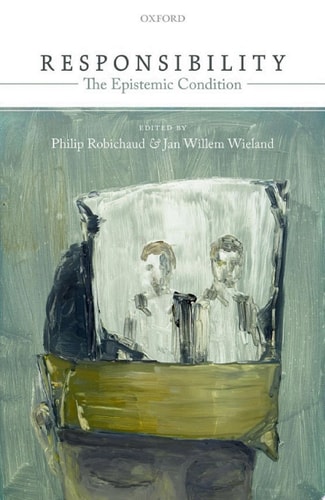
Responsibility: The Epistemic Condition
0
0
As an Amazon Associate and affiliate partner, Menrva Books earns from qualifying purchases. Learn more
Author Description
Philosophers have long agreed that moral responsibility might not only have a freedom condition, but also an epistemic condition. Moral responsibility and knowledge interact, but the question is exactly how. Ignorance might constitute an excuse, but the question is exactly when. Surprisingly enough, the epistemic condition has only recently attracted the attention of scholars. This volume sets the agenda. Sixteen new essays address the following central questions: Does the epistemic condition require akrasia? Why does blameless ignorance excuse? Does moral ignorance sustained by one's culture excuse? Does the epistemic condition involve knowledge of the wrongness or wrongmaking features of one's action? Is the epistemic condition an independent condition, or is it derivative from one's quality of will or intentions? Is the epistemic condition sensitive to degrees of difficulty? Are there different kinds of moral responsibility and thus multiple epistemic conditions? Is the epistemic condition revisionary? What is the basic structure of the epistemic condition?
Menrva's Summary
THE THESIS
This volume investigates the nature and requirements of the epistemic condition for moral responsibility. Editors Jan Willem Wieland and Philip Robichaud compile sixteen original essays that examine how knowledge and ignorance interact with moral accountability. The contributors analyze whether ignorance serves as a valid excuse and how the epistemic condition relates to broader concepts like quality of will, cultural influence, and moral wrongness.
THE SCOPE MAP
What You Will Find
- Analysis of the relationship between moral responsibility and knowledge
- Theoretical frameworks regarding blameless ignorance and moral wrongness
- Examination of the role of akrasia and cultural context in moral judgment
Scope Limits
- The text focuses primarily on analytic philosophical perspectives rather than sociological or legal applications
- It does not provide a singular, unified theory but rather explores multiple competing viewpoints
THE AUTHORITY PERSPECTIVE
Experts identify this collection as a significant contribution to the contemporary discourse on moral responsibility. Readers frequently note the academic density of the prose, which is intended for scholars and advanced students of ethics.
Page Count:
311
Publication Date:
2017-01-01
Publisher:
OUP Oxford
ISBN-10:
0191085235
ISBN-13:
9780191085239
Philosophy
Ethics
Knowledge Theory
Epistemology
Responsibility
Academic