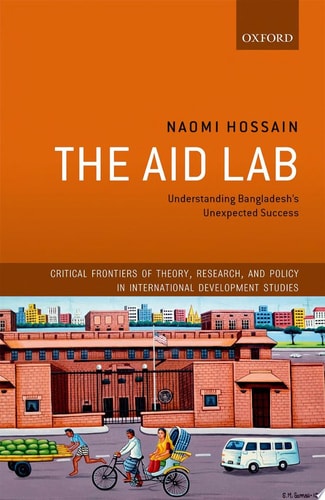
The Aid Lab
0
0
As an Amazon Associate and affiliate partner, Menrva Books earns from qualifying purchases. Learn more
Author Description
From An Unpromising Start As 'the Basket-case' To Present Day Plaudits For Its Human Development Achievements, Bangladesh Plays An Ideological Role In The Contemporary World Order, Offering Proof That The Neo-liberal Development Model Works Under The Most Testing Conditions. How Were Such Rapid Gains Possible In A Context Of Chronically Weak Governance? The Aid Lab Subjects This So-called 'bangladesh Paradox' To Close Scrutiny, Evaluating Public Policies And Their Outcomes For Poverty And Development Since Bangladesh's Independence In 1971. Countering Received Wisdom That Its Gains Owe To An Early Shift To Market-oriented Economic Reform, It Argues That A Binding Political Settlement, A Social Contract To Protect Against The Crises Of Subsistence And Survival, United The Elite, The Masses, And Their Aid Donors In The Wake Of The Devastating Famine Of 1974. This Laid Resilient Foundations For Human Development, Fostering A Focus On The Poorest And Most Precarious, And In Particular On The Concerns Of Women. In Chapters Examining The Environmental, Political And Socioeconomic Crisis Of The 1970s, The Book Shows How The Lessons Of The Famine Led To A Robustly Pro-poor Growth And Social Policy Agenda, Empowering The Bangladeshi State And Its Non-governmental Organizations To Protect And Enable Its Population To Thrive In Its Engagements In The Global Economy. Now A Middle-income Country, Bangladesh's Role As The World's Laboratory For Aided Development Has Generated Lessons Well Beyond Its Borders, And Bangladesh Continues To Carve A Pioneering Pathway Through The Risks Of Global Economic Integration And Climate Change.
Menrva's Summary
THE THESIS
This book investigates how Bangladesh achieved significant human development gains despite a history of weak governance and economic instability. Author Naomi Hossain, a political sociologist specializing in development, challenges the conventional narrative that market-oriented reforms were the primary driver of the country's success. Instead, she argues that a post-famine political settlement established a social contract that prioritized the needs of the poor and women, creating a resilient framework for national progress.
THE SCOPE MAP
What You Will Find
- Analysis of the 1974 famine as a critical juncture for national policy.
- Examination of the symbiotic relationship between the state, NGOs, and international aid donors.
- Evaluation of social policies targeting poverty reduction and gender equality.
Scope Limits
- The analysis focuses primarily on the period from 1971 to the present.
- The text does not provide a comprehensive economic history of all industrial sectors.
THE AUTHORITY PERSPECTIVE
Experts in development studies recognize this work as a significant contribution to understanding the 'Bangladesh Paradox' and the role of political settlements in state-building. Readers frequently note the academic rigor of the research and the author's ability to synthesize complex political and socioeconomic data into a coherent argument.
Page Count:
264
Publication Date:
2017-01-01
Publisher:
Oxford University Press
ISBN-10:
0191088315
ISBN-13:
9780191088315
Public Policy
Sociology
International relations
Bangladesh History
Community Tags
Similar Books