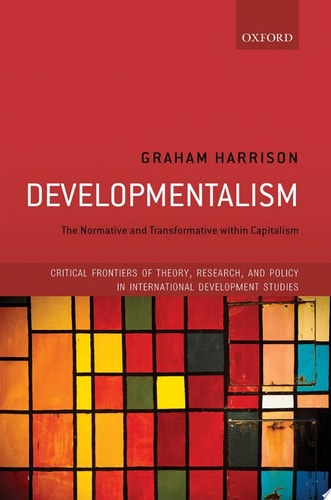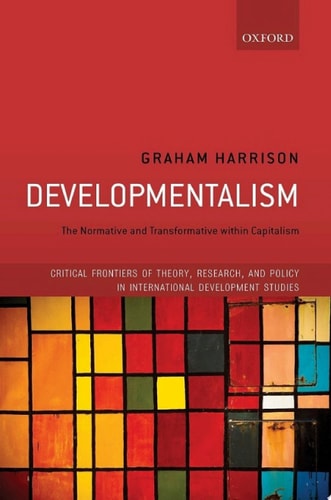
Developmentalism: The Normative and Transformative within Capitalism
0
0
As an Amazon Associate and affiliate partner, Menrva Books earns from qualifying purchases. Learn more
Author Description
Why do so few countries achieve development success? Achieving development requires many changes over a short period of time, generating instability and risk. It is a deep and integrated economy of change involving force, strategic thinking, and ideological conviction - it emerges when successful development is seen as necessary for the survival of a political order. Developmentalism engages with the moral issues that this raises. Developmentalism: The Normative and Transformative within Capitalism uses a historical comparative approach to understand development as a transformation which involves a deep and integrated political economy of change - a shift from a state of 'capital-ascendance' to 'capital dominance'. It is only through a transformation towards capital dominance that mass poverty reduction and the construction of a commonwealth are possible. However, capitalist development is extremely difficult and requires a highly exacting political endeavour. The politics of development is conceptualized as developmentalism: a strategy and ideology in which governments exercise heavy directive power, endure instability and crisis, and secure a rudimentary legitimacy for their efforts. This book argues that developmentalism requires a conflation of successful capitalist transformation with some form of existential insecurity of the state itself. It flourishes when capitalist transformation connects to profound questions of sovereignty, statehood, nation-building, and elite survival. Developmentalism shows deep contextualisation of capitalist transformation as well as the massive improvements in material life that it has generated.
Menrva's Summary
THE THESIS
This book investigates the core question of why development success remains elusive for most nations and what specific political conditions are required to achieve it. Graham Harrison, a scholar in international development, utilizes a historical comparative framework to argue that successful development is not merely an economic process but a profound political transformation. He posits that developmentalism—a strategy of heavy state direction and ideological conviction—is essential for transitioning from capital-ascendance to capital-dominance, a shift he identifies as the only viable path to mass poverty reduction.
THE SCOPE MAP
What You Will Find
- A historical comparative analysis of capitalist transformation across various national contexts.
- A theoretical framework defining developmentalism as a synthesis of state sovereignty, nation-building, and elite survival.
- An examination of the relationship between state-led directive power and the mitigation of economic instability.
Scope Limits
- The text does not provide a prescriptive manual for policy implementation in specific contemporary developing nations.
- The analysis focuses primarily on the macro-political conditions of statehood rather than micro-economic development metrics.
THE AUTHORITY PERSPECTIVE
Scholars in the field of international development view this work as a rigorous contribution to the political economy of state-building. Readers frequently note the dense, theoretical nature of the prose, which is intended for an academic audience interested in the structural requirements of capitalist transformation.
Page Count:
290
Publication Date:
2020-01-01
Publisher:
OUP Oxford
ISBN-10:
0191088811
ISBN-13:
9780191088810
Capitalism
Sociology
International Development