Theory-based Ecology
0
0
As an Amazon Associate and affiliate partner, Menrva Books earns from qualifying purchases. Learn more
Author Description
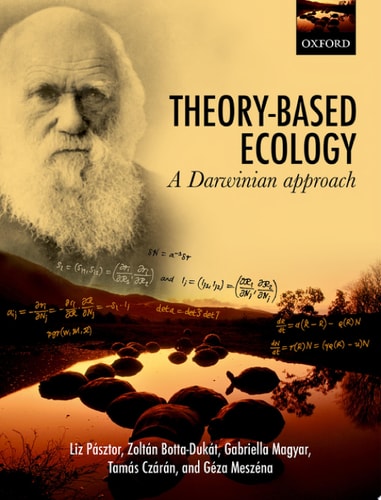
Ecology Is In A Challenging State As A Scientific Discipline. While Some Theoretical Ecologists Are Attempting To Build A Definition Of Ecology From First Principles, Many Others Are Questioning Even The Feasibility Of A General And Universal Theory. At The Same Time, It Is Increasingly Important That Ecology Is Accurately And Functionally Defined For A Generation Of Researchers Tackling Escalating Environmental Problems In The Face Of Doubt And Disagreement. The Authors Of Theory-based Ecology Have Written A Textbook That Presents A Robust, Modern, And Mathematically Sound Theory Of Ecology, Maintaining A Strong Link Between Empirical Data, Models, And Theory. It Is Firmly Based In Darwinian Thought, Since It Was Darwin Who First Revealed The Ecological Principles Of The Origin Of Species, And Gave The Evolution Of Diversity A Process-based, Mechanistic Explanation. The Authors Base Their Synthetic Theory Of Darwinian Ecology On Seven Key Principles: Exponential Growth, Growth Regulation, Inherited Individual Differences, Finiteness And Stochasticity, Competitive Exclusion, Robust Coexistence, And Constraints And Trade-offs. Within This Solid Conceptual Framework, They Integrate Classic And Actual Empirical Knowledge From Ecology And Evolutionary Biology, Clarifying Methodological And Mathematical Detail In Clear And Helpful Text Boxes. A Wealth Of Illustrated Examples Pertaining To Different Organisational Levels (alleles, Clones And Species) Helps To Explain How The Principles Operate. This Is An Invaluable Resource For Graduate Level Students As Well As Professional Researchers In The Fields Of Ecology, Genetics, Evolutionary Ecology, And Mathematical Biology.
Menrva's Summary
THE THESIS
This book investigates whether a general and universal theory of ecology can be constructed from first principles to address the current state of the discipline. The authors, a team of researchers specializing in ecology and evolutionary biology, argue that a robust, modern, and mathematically sound framework is necessary for contemporary environmental research. By grounding their synthesis in Darwinian thought, they propose a process-based, mechanistic explanation for the evolution of diversity that bridges the gap between empirical data and theoretical modeling.
THE SCOPE MAP
What You Will Find
- A conceptual framework built on seven key principles: exponential growth, growth regulation, inherited individual differences, finiteness and stochasticity, competitive exclusion, robust coexistence, and constraints and trade-offs.
- Methodological and mathematical explanations provided in specialized text boxes.
- Illustrated examples covering various organizational levels, including alleles, clones, and species.
Scope Limits
- The text focuses primarily on a Darwinian-based theoretical synthesis and does not provide an exhaustive survey of all competing ecological paradigms.
THE AUTHORITY PERSPECTIVE
Experts and graduate-level researchers identify this work as a rigorous, foundational text for those seeking to integrate mathematical modeling with ecological theory. Readers frequently note the high level of technical and mathematical density, which makes the book suitable for advanced study in the biological sciences.
Page Count:
352
Publication Date:
2016-01-01
Publisher:
Oxford University Press
ISBN-10:
019108414X
ISBN-13:
9780191084140
Science
Mathematical Biology
textbook
Evolutionary Biology
Ecology
Community Tags
Similar Books