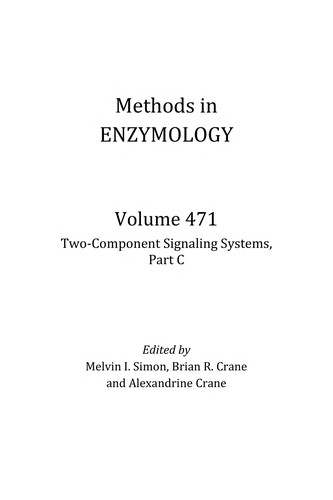
Two-component signaling systems
0
0
As an Amazon Associate and affiliate partner, Menrva Books earns from qualifying purchases. Learn more
Author Description
Two-component signal transduction systems are the most common signal transduction pathway in prokaryotes, and are also found in eukaryotes. They are involved in a vast array of cellular processes, including gene regulation, metabolism, cell division, and virulence. This volume provides a comprehensive overview of the molecular mechanisms and biological roles of these systems. It covers the structure and function of the individual components, the mechanisms of signal transduction, and the diversity of these systems in different organisms. The book also discusses the experimental approaches used to study two-component systems and their potential as targets for drug development.
Menrva's Summary
THE THESIS
This book investigates the intricate mechanisms of two-component signaling systems, crucial for cellular communication in diverse organisms. It delves into the molecular architecture and functional dynamics of these systems, which typically comprise a sensor histidine kinase and a response regulator. The work explores how these components interact to transduce environmental signals into cellular responses, covering signal detection, signal amplification, and regulatory feedback loops.
THE SCOPE MAP
- Detailed examination of the structural components of histidine kinases and response regulators.
- Analysis of signal transduction pathways and regulatory networks.
- Discussion of the evolutionary significance and diversity of two-component systems.
- Case studies illustrating the roles of these systems in bacteria, plants, and fungi.
- Exploration of their involvement in processes such as gene regulation, metabolism, and virulence.
- Insights into experimental approaches used to study these signaling systems.
THE AUTHORITY PERSPECTIVE
This book is recognized as a comprehensive and authoritative resource for researchers and advanced students in molecular biology and biochemistry. It is valued for its detailed exploration of the fundamental principles and diverse applications of two-component signaling systems. The work is cited for its thorough coverage of both established knowledge and emerging research in the field, providing a solid foundation for understanding cellular communication.
Page Count:
0
Publication Date:
2007-01-01
ISBN-10:
0123813476
ISBN-13:
9780123813473
Science
Non-Fiction
Biochemistry
Genetics
Community Tags
Similar Books