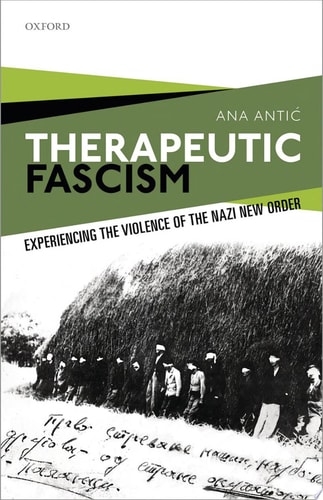
Therapeutic Fascism
0
0
As an Amazon Associate and affiliate partner, Menrva Books earns from qualifying purchases. Learn more
Author Description
During World War Two, Death And Violence Permeated All Aspects Of The Everyday Lives Of Ordinary People In Eastern Europe. Throughout The Region, The Realities Of Mass Murder And Incarceration Meant That People Learnt To Live With Daily Public Hangings Of Civilian Hostages And Stumbled On Corpses Of Their Neighbors. Entire Populations Were Drawn Into Fierce And Uncompromising Political And Ideological Conflicts, And Many Ended Up Being More Than Mere Victims Or Observers: They Themselves Became Perpetrators Or Facilitators Of Violence, Often To Protect Their Own Lives, But Also To Gain Various Benefits. Yugoslavia In Particular Saw A Gradual Culmination Of A Complex And Brutal Civil War, Which Ultimately Killed More Civilians Than Those Killed By The Foreign Occupying Armies. Therapeutic Fascism Tells A Story Of The Tremendous Impact Of Such Pervasive And Multi-layered Political Violence, And Looks At Ordinary Citizens' Attempts To Negotiate These Extraordinary Wartime Political Pressures. It Examines Yugoslav Psychiatric Documents As Unique Windows Into This Harrowing History, And Provides An Original Perspective On The Effects Of Wartime Violence And Occupation Through The History Of Psychiatry, Mental Illness, And Personal Experience. Using Previously Unexplored Resources, Such As Patients' Case Files, State And Institutional Archives, And The Professional Medical Literature Of The Time, This Volume Explores The Socio-cultural History Of Wartime Through The Eyes Of (mainly Lower-class) Psychiatric Patients. Ana Antic Examines How The Experiences Of Observing, Suffering, And Committing Political Violence Affected The Understanding Of Human Psychology, Pathology, And Normality In Wartime And Post-war Balkans And Europe.
Menrva's Summary
THE THESIS
This book investigates how the pervasive political violence of World War II in Yugoslavia fundamentally altered the medical and social understanding of mental health, normality, and human pathology. Ana Antić, a historian specializing in the history of psychiatry and modern Europe, utilizes previously untapped psychiatric case files, state archives, and medical literature to analyze how ordinary citizens and medical professionals navigated the trauma of occupation and civil conflict. The work argues that psychiatric institutions served as critical sites where the boundaries between victimhood, perpetration, and mental illness were negotiated under extreme political pressure.
THE SCOPE MAP
What You Will Find
- Analysis of psychiatric patient case files from wartime and post-war Yugoslavia.
- Examination of professional medical literature regarding trauma and political violence.
- Socio-cultural history focusing on the experiences of lower-class psychiatric patients.
- Investigation into the shifting definitions of normality and pathology during periods of mass violence.
Scope Limits
- The study is geographically centered on Yugoslavia and does not provide a comprehensive history of European psychiatry as a whole.
- The research focuses primarily on the experiences of lower-class patients and does not extensively cover the elite political class.
THE AUTHORITY PERSPECTIVE
Historians and scholars of the Balkans recognize this work as a significant contribution to the intersection of medical history and political violence. Readers frequently note the academic density of the prose and the meticulous use of primary source documentation to reconstruct the lived experience of wartime trauma.
Page Count:
288
Publication Date:
2016-01-01
Publisher:
Oxford University Press
ISBN-10:
0191087505
ISBN-13:
9780191087509
History
Psychiatry
Social History
MEDICAL History
World War
European History
Yugoslavia
Community Tags
Similar Books