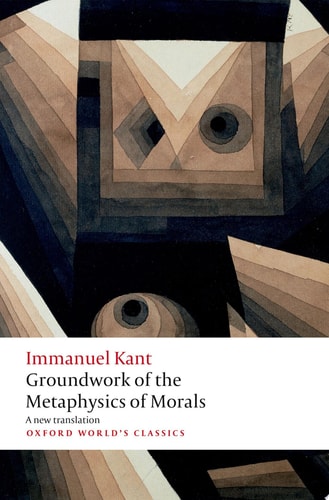
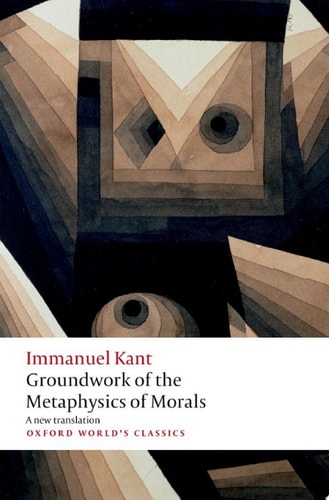
Groundwork For The Metaphysics Of Morals
0
0
As an Amazon Associate and affiliate partner, Menrva Books earns from qualifying purchases. Learn more
Author Description
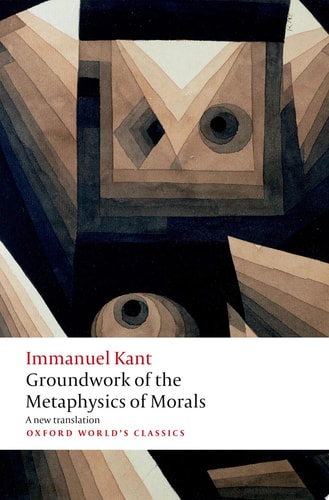
'The present Groundwork is nothing more than the identification and vindication of the supreme principle of morality.' In The Groundwork for the Metaphysics of Morals (1785), Immanuel Kant makes clear his two central intentions: first, to uncover the principle that underpins morality, and secondly to defend its applicability to human beings. The result is one of the most significant texts in the history of ethics, and a masterpiece of Enlightenment thinking. Kant argues that moral law tells us to act only in ways that others could also act, thereby treating them as ends in themselves and not merely as means. Kant contends that despite apparent threats to our freedom from science, and to ethics from our self-interest, we can nonetheless take ourselves to be free rational agents, who as such have a motivation to act on this moral law, and thus the ability to act as moral beings. One of the most studied works of moral philosophy, this new translation by Robert Stern, Joe Saunders, and Christopher Bennett illuminates this famous text for modern readers.
Menrva's Summary
THE THESIS
What is the supreme principle of morality, and how can it be justified as applicable to human beings? Immanuel Kant, a central figure of Enlightenment philosophy, constructs a rigorous framework to identify the foundational law of ethics. By analyzing the nature of rational agency, he argues that moral duty is derived from reason itself rather than empirical observation or self-interest.
THE SCOPE MAP
What You Will Find
- The formulation of the Categorical Imperative
- Analysis of the distinction between hypothetical and categorical imperatives
- Examination of the relationship between autonomy, freedom, and moral law
Scope Limits
- Does not provide a comprehensive system of applied ethics or specific case law
- Does not address theological or religious foundations for morality
THE AUTHORITY PERSPECTIVE
Scholars and students consistently identify this work as a foundational text in Western moral philosophy, noting its high level of conceptual density. Experts emphasize that while the prose is demanding, it remains the primary entry point for understanding Kantian deontological ethics.
Page Count:
176
Publication Date:
2019-01-01
Publisher:
Oxford University Press
ISBN-10:
0191089451
ISBN-13:
9780191089459
Non-Fiction
Philosophy
Enlightenment
Moral Philosophy
Ethics
Community Tags
Other Editions(10)


Similar Books




Reader Comments
Share Your Thoughts
No comments yet. Be the first to share your thoughts!