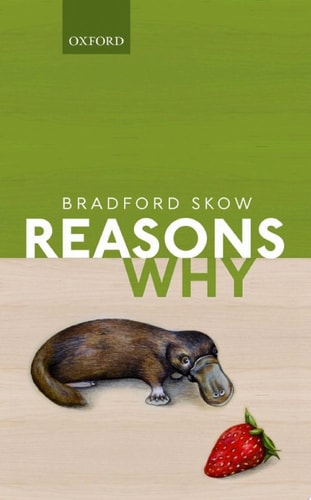
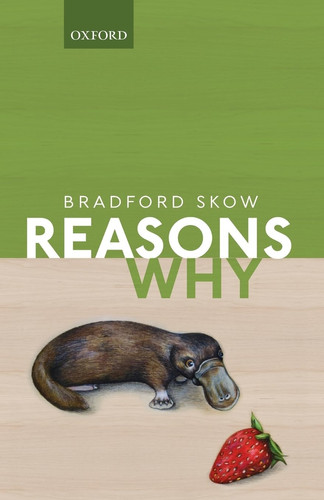
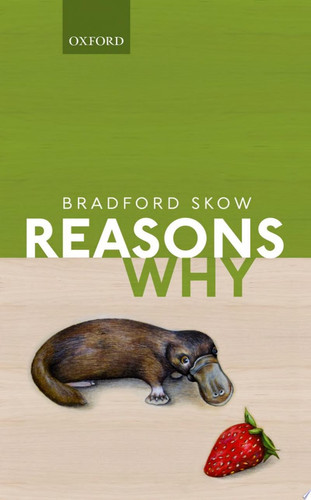
Reasons Why
0
0
As an Amazon Associate and affiliate partner, Menrva Books earns from qualifying purchases. Learn more
Author Description
Reasons Why first argues that what philosophers are really after, or at least should be after, when they seek a theory of explanation, is a theory of answers to why-questions. It then advances a thesis about what form a theory of answers to why-questions should take: a theory of answers to why-questions should say what it takes for one fact to be a reason why another fact obtains. The book's main thesis, then, is a theory of reasons why. Every reason why some event happened is either a cause, or a ground, of that event. Challenging this thesis are many examples philosophers have thought they have found of "non-causal explanations." Reasons Why uses two ideas to show that these examples are not counterexamples to the theory it defends. First is the idea that not every part of a good response to a why-question is part of an answer to that why-question. Second is the idea that not every reason why something is a reason why an event happened is itself a reason why that event happened. In the book's final chapter its theory of reasons why is extended to cover teleological answers to why-questions, and answers to why-questions that give an agent's reason for acting.
Menrva's Summary
THE THESIS
This book investigates the fundamental nature of explanation by arguing that a theory of explanation is equivalent to a theory of answers to why-questions. Bradford Skow, a philosopher specializing in metaphysics and the philosophy of science, utilizes logical analysis to propose that every reason why an event occurs is either a cause or a ground of that event. He constructs a framework that addresses potential counterexamples by distinguishing between the components of a response and the components of an answer, ultimately extending this theory to include teleological and agent-based explanations.
THE SCOPE MAP
What You Will Find
- A formal theory of reasons why based on causality and grounding.
- A distinction between causal and non-causal explanations.
- Analysis of teleological explanations and reasons for action.
Scope Limits
- The text does not provide an exhaustive survey of all historical theories of explanation.
- It focuses primarily on analytic philosophical arguments rather than empirical scientific case studies.
THE AUTHORITY PERSPECTIVE
Scholars in the field of metaphysics identify this work as a rigorous contribution to the ongoing debate regarding the structure of explanation. Readers frequently note the technical density of the prose, which requires a strong background in analytic philosophy to fully grasp the author's logical distinctions.
Page Count:
207
Publication Date:
2016-01-01
Publisher:
OUP Oxford
ISBN-10:
0191088870
ISBN-13:
9780191088872
Philosophy
Logic
Science
Academic
Epistemology
Logic & Critical Reasoning
Metaphysics
Community Tags
Other Editions(4)

Similar Books