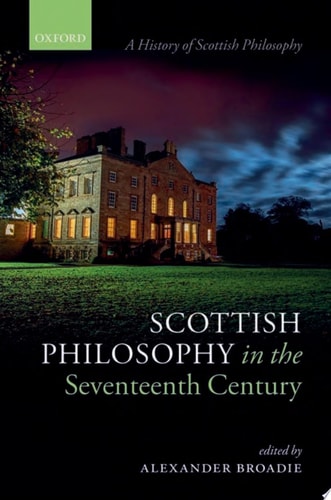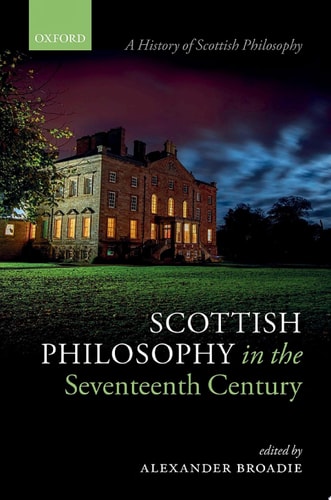
Scottish Philosophy in the Seventeenth Century
0
0
As an Amazon Associate and affiliate partner, Menrva Books earns from qualifying purchases. Learn more
Author Description
During the seventeenth century Scots produced many high quality philosophical writings, writings that were very much part of a wider European philosophical discourse. Yet today Scottish philosophy of the sixteenth and eighteenth centuries is widely studied, but that of the seventeenth century is only now beginning to receive the attention it deserves. This volume begins by placing the seventeenth-century Scottish philosophy in its political and religious contexts, and then investigates the writings of the philosophers in the areas of logic, metaphysics, politics, ethics, law, and religion. It is demonstrated that in a variety of ways the Scottish Reformation impacted on the teaching of philosophy in the Scottish universities. It is also shown that until the second half of the century—and the arrival of Descartes on the Scottish philosophy curriculum—the Scots were teaching and developing a form of Reformed orthodox scholastic philosophy, a philosophy that shared many features with the scholastic Catholic philosophy of the medieval period. By the early eighteenth century Scotland was well placed to give rise to the spectacular Enlightenment that then followed, and to do so in large measure on the basis of its own well-established intellectual resources. Among the many thinkers discussed are Reformed orthodox, Episcopalian, and Catholics philosophers including George Robertson, George Middleton, John Boyd, Robert Baron, Mark Duncan, Samuel Rutherford, James Dundas (first Lord Arniston), George Mackenzie, James Dalrymple (Viscount Stair), and William Chalmers.
Menrva's Summary
THE THESIS
This volume investigates the overlooked intellectual contributions of seventeenth-century Scottish philosophers and their role in establishing the foundation for the subsequent Scottish Enlightenment. Alexander Broadie, a recognized scholar in the history of Scottish philosophy, utilizes primary source texts from university curricula and theological treatises to argue that Scottish thought was deeply integrated into broader European discourse. He demonstrates how the Scottish Reformation and the transition from Reformed orthodox scholasticism to Cartesian influence shaped the intellectual landscape of the era.
THE SCOPE MAP
What You Will Find
- Analysis of philosophical developments in logic, metaphysics, politics, ethics, law, and religion.
- Examination of the impact of the Scottish Reformation on university teaching methods.
- Discussion of key figures including George Robertson, Samuel Rutherford, and James Dalrymple.
Scope Limits
- The text focuses primarily on the seventeenth century and does not provide an exhaustive analysis of the eighteenth-century Enlightenment itself.
- The work is limited to the academic and theological output of Scottish institutions and does not cover popular or non-academic cultural movements of the time.
THE AUTHORITY PERSPECTIVE
Scholars and historians of philosophy identify this work as a critical corrective to the historical neglect of seventeenth-century Scottish thought. Readers frequently note the academic density of the prose, which is intended for those with a background in intellectual history or early modern philosophy.
Page Count:
246
Publication Date:
2020-01-01
Publisher:
OUP Oxford
ISBN-10:
019108252X
ISBN-13:
9780191082528
History
Philosophy
Academic
History & Surveys
Scottish History
Intellectual History