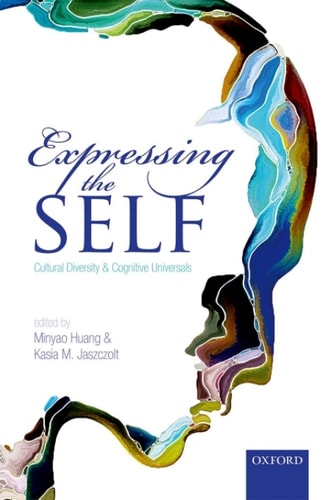
Expressing the Self: Cultural Diversity and Cognitive Universals
0
0
As an Amazon Associate and affiliate partner, Menrva Books earns from qualifying purchases. Learn more
Author Description
This book addresses different linguistic and philosophical aspects of referring to the self in a wide range of languages from different language families, including Amharic, English, French, Japanese, Korean, Mandarin, Newari (Sino-Tibetan), Polish, Tariana (Arawak), and Thai. In the domain of speaking about oneself, languages use a myriad of expressions that cut across grammatical and semantic categories, as well as a wide variety of constructions. Languages of Southeast and East Asia famously employ a great number of terms for first person reference to signal honorification. The number and mixed properties of these terms make them debatable candidates for pronounhood, with many grammar-driven classifications opting to classify them with nouns. Some languages make use of egophors or logophors, and many exhibit an interaction between expressing the self and expressing evidentiality qua the epistemic status of information held from the ego perspective. The volume's focus on expressing the self, however, is not directly motivated by an interest in the grammar or lexicon, but instead stems from philosophical discussions on the special status of thoughts about oneself, known as de se thoughts. It is this interdisciplinary understanding of expressing the self that underlies this volume, comprising philosophy of mind at one end of the spectrum and cross-cultural pragmatics of self-expression at the other. This unprecedented juxtaposition results in a novel method of approaching de se and de se expressions, in which research methods from linguistics and philosophy inform each other. The importance of this interdisciplinary perspective on expressing the self cannot be overemphasized. Crucially, the volume also demonstrates that linguistic research on first-person reference makes a valuable contribution to research on the self tout court, by exploring the ways in which the self is expressed, and thereby adding to the insights gained through philosophy, psychology, and cognit
Menrva's Summary
THE THESIS
This volume investigates the intersection of linguistic expression and philosophical inquiry regarding the concept of the self, specifically focusing on how different languages encode 'de se' thoughts. The authors, Kasia M. Jaszczolt and Minyao Huang, synthesize research from philosophy of mind and cross-cultural pragmatics to examine how first-person reference functions across diverse language families. By bridging the gap between grammatical structure and cognitive theory, the text argues that linguistic data provides critical insights into the nature of self-conception that purely philosophical or psychological approaches might overlook.
THE SCOPE MAP
What You Will Find
- Comparative analysis of first-person reference in languages including Amharic, Japanese, Mandarin, and Tariana.
- Examination of honorifics, egophors, and logophors as mechanisms for self-expression.
- Integration of cross-cultural pragmatics with the philosophical study of 'de se' thoughts.
- Discussion on the relationship between evidentiality and the ego perspective.
Scope Limits
- The book does not provide a comprehensive survey of every global language family.
- It does not focus on the historical evolution of pronouns, but rather on their current functional and cognitive roles.
THE AUTHORITY PERSPECTIVE
Experts identify this volume as a significant interdisciplinary contribution that successfully bridges the divide between formal linguistics and the philosophy of mind. Readers frequently note the academic density of the prose, which is best suited for researchers and advanced students in cognitive science or linguistic anthropology.
Page Count:
336
Publication Date:
2018-01-01
Publisher:
OUP Oxford
ISBN-10:
0191090298
ISBN-13:
9780191090295
Philosophy
Linguistics
Self
English & College Success
Pragmatics
English
Philosophy of
Community Tags
Similar Books