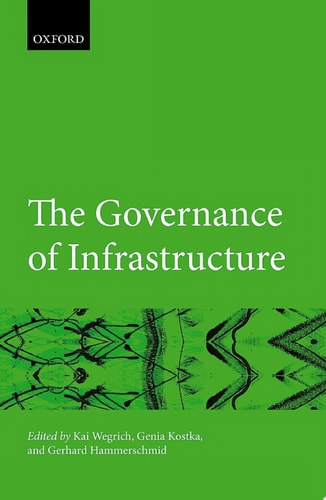
The Governance of Infrastructure
0
0
As an Amazon Associate and affiliate partner, Menrva Books earns from qualifying purchases. Learn more
Author Description
Infrastructure only tends to be noticed when it is absent, declining, or decrepit, or when enormous cost overruns, time delays, or citizen protests make the headlines. If infrastructure is indeed a fundamental driver of economic growth and social development, why is it so difficult to get right? In addressing this perennial question, this volume-the fourth edition in an annual series tackling different aspects of governance around the world-makes the case for a governance perspective on infrastructure. This implies moving beyond rational economic analysis of what should be done towards an analysis of the political, institutional, and societal mechanisms that shape decision-making about infrastructure investment, planning, and implementation. Engaging with theories from sociology, political science, and public administration, and drawing on empirical analyses bridging OECD and non-OECD countries, the contributions to this volume dissect the logics of infrastructure governance in a novel way, providing timely analyses that will enrich both scholarly and policy debates about how to get infrastructure governance right.
Menrva's Summary
THE THESIS
This volume investigates why infrastructure projects frequently suffer from failure, delays, and cost overruns by shifting the focus from purely economic rationalism to the complex political and institutional mechanisms that govern decision-making. The authors, including Genia Kostka and Gerhard Hammerschmid, utilize a multidisciplinary framework to argue that infrastructure success depends less on technical planning and more on the societal and administrative structures that shape implementation. By integrating theories from sociology and political science, the text provides a comprehensive lens through which to evaluate the governance of large-scale public investments.
THE SCOPE MAP
What You Will Find
- Comparative analysis of infrastructure governance across OECD and non-OECD nations
- Theoretical frameworks derived from public administration and political science
- Empirical studies on the political and institutional drivers of project outcomes
Scope Limits
- Does not provide technical engineering or construction management guidelines
- Excludes detailed financial modeling or specific project-level cost-benefit analysis
THE AUTHORITY PERSPECTIVE
Experts identify this work as a significant contribution to the study of public policy and governance, particularly for its focus on the political dimensions of infrastructure. Readers frequently note the academic density of the prose, making it a valuable resource for scholars and policy practitioners interested in institutional reform.
Page Count:
300
Publication Date:
2017-01-01
Publisher:
Oxford University Press
ISBN-10:
0191091057
ISBN-13:
9780191091056
Economics
Public Administration
Governance
Infrastructure
Sociology
Community Tags
Similar Books