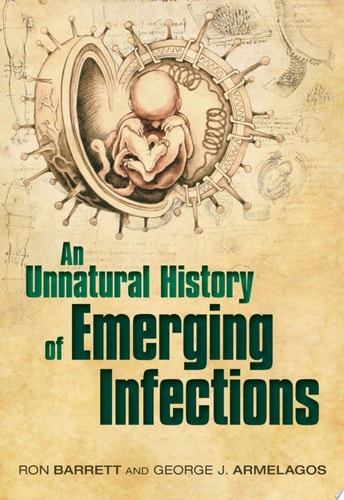
Unnatural History of Emerging Infections
0
0
As an Amazon Associate and affiliate partner, Menrva Books earns from qualifying purchases. Learn more
Author Description
This Book Traces The Social And Environmental Determinants Of Human Infectious Diseases From The Neolithic To The Present Day. Despite Recent High Profile Discoveries Of New Pathogens, The Major Determinants Of These Emerging Infections Are Ancient And Recurring. These Include Changing Modes Of Subsistence, Shifting Populations, Environmental Disruptions, And Social Inequalities. The Recent Labeling Of The Term Re-emerging Infections Reflects A Re-emergence, Not So Much Of The Diseases Themselves, But Rather A Re-emerging Awareness In Affluent Societies Of Long-standing Problems That Were Previously Ignored. An Unnatural History Of Emerging Infections Illustrates These Recurring Problems And Determinants Through An Examination Of Three Major Epidemiological Transitions. The First Transition Occurred With The Agricultural Revolution Beginning 10,000 Years Ago, Bringing A Rise In Acute Infections As The Main Cause Of Human Mortality. The Second Transition First Began With The Industrial Revolution; It Saw A Decline In Infectious Disease Mortality And An Increase In Chronic Diseases Among Wealthier Nations, But Less So In Poorer Societies. These Culminated In Today's Worst Of Both Worlds Syndrome In Which Globalization Has Combined With The Challenges Of The First And Second Transitions To Produce A Third Transition, Characterized By A Confluence Of Acute And Chronic Disease Patterns Within A Single Global Disease Ecology. This Accessible Text Is Suitable For Advanced Undergraduate And Graduate Level Students And Researchers In The Fields Of Epidemiology, Disease Ecology, Anthropology, Health Sciences, And The History Of Medicine. It Will Also Be Of Relevance And Use To Undergraduate Students Interested In The History And Social Dynamics Of Infectious Diseases.
Menrva's Summary
THE THESIS
This book investigates the social and environmental determinants of human infectious diseases by analyzing how historical shifts in human behavior and ecology have consistently shaped disease patterns from the Neolithic era to the modern day. The authors, including the late George Armelagos and Professor Ron Barrett, utilize an anthropological and epidemiological framework to argue that emerging infections are not merely biological accidents but are driven by recurring human activities such as agricultural expansion, industrialization, and globalization. By framing disease through three major epidemiological transitions, the text demonstrates that current health crises are the result of long-standing systemic issues rather than isolated, novel events.
THE SCOPE MAP
What You Will Find
- Analysis of the three major epidemiological transitions: the Agricultural Revolution, the Industrial Revolution, and the modern era of globalization.
- Examination of the 'worst of both worlds' syndrome, where acute and chronic disease patterns converge.
- Discussion of social inequalities and environmental disruptions as primary drivers of pathogen emergence.
Scope Limits
- The text focuses primarily on the macro-level social and environmental determinants rather than providing detailed clinical or molecular analysis of specific pathogen biology.
THE AUTHORITY PERSPECTIVE
Experts and academics recognize this work as a foundational text for understanding the intersection of anthropology and public health. Readers frequently note the clarity of the prose, which makes complex epidemiological transitions accessible to both undergraduate students and seasoned researchers in the field.
Page Count:
168
Publication Date:
2013-01-01
Publisher:
Oxford University Press
ISBN-10:
0191507148
ISBN-13:
9780191507144
Anthropology
Public Health
Social Science
Medicine history
Disease Ecology
Epidemiology
Community Tags
Similar Books