The Great War and the Middle East
0
0
As an Amazon Associate and affiliate partner, Menrva Books earns from qualifying purchases. Learn more
Author Description
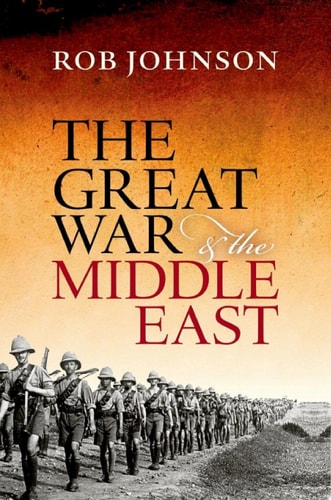
The First World War in the Middle East swept away five hundred years of Ottoman domination. It ushered in new ideologies and radicalised old ones - from Arab nationalism and revolutionary socialism to impassioned forms of atavistic Islamism. It created heroic icons, like the enigmatic Lawrence of Arabia or the modernizing Atatürk, and destroyed others. And it completely re-drew the map of the region, forging a host of new nation states, including Turkey, Iraq, Syria, Jordan, Lebanon, and Saudi Arabia - all of them (with the exception of Turkey) under the 'protection' of the victor powers, Britain and France. For many, the self-serving intervention of these powers in the region between 1914 and 1919 is the major reason for the conflicts that have raged there on and off ever since. Yet many of the most commonly accepted assertions about the First World War in the Middle East are more often stated than they are truly tested. Rob Johnson, military historian and former soldier, now seeks to put this right by examining in detail the strategic and operational course of the war in the Middle East. Johnson argues that, far from being a sideshow to the war in Europe, the Middle Eastern conflict was in fact the centre of gravity in a war for imperial domination and prestige. Moreover, contrary to another persistent myth of the First World War in the Middle East, local leaders and their forces were not simply the puppets of the Great Powers in any straightforward sense. The way in which these local forces embraced, resisted, succumbed to, disrupted, or on occasion overturned the plans of the imperialist powers for their own interests in fact played an important role in shaping the immediate aftermath of the conflict - and in laying the foundations for the troubled Middle East that we know today.
Menrva's Summary
THE THESIS
This book investigates whether the Middle Eastern theater of the First World War was a peripheral sideshow or the true center of gravity for imperial competition and regional transformation. Rob Johnson, a military historian and former soldier, utilizes a strategic and operational lens to re-examine the conflict. He challenges the narrative that local actors were merely passive puppets of Britain and France, arguing instead that indigenous leaders actively shaped the war's outcome and the subsequent geopolitical landscape.
THE SCOPE MAP
What You Will Find
- Analysis of the strategic and operational military campaigns in the Middle East between 1914 and 1919.
- Examination of the collapse of the Ottoman Empire and the subsequent creation of modern nation-states.
- Evaluation of the agency of local leaders in resisting or manipulating imperial plans.
Scope Limits
- The text focuses primarily on the military and strategic dimensions of the conflict rather than a comprehensive social or cultural history of the entire region.
THE AUTHORITY PERSPECTIVE
Experts and readers alike note that Johnson provides a rigorous, evidence-based challenge to long-standing historical myths regarding the Middle Eastern theater. The text is frequently cited for its ability to balance high-level military strategy with the complex political realities of the period.
Page Count:
382
Publication Date:
2016-01-01
Publisher:
OUP Oxford
ISBN-10:
0191506311
ISBN-13:
9780191506314
History
Middle East
Military History
Geopolitics
Middle Eastern
World War
Community Tags
Similar Books