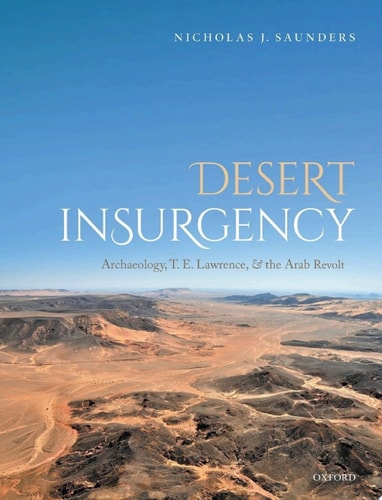
Desert Insurgency: Archaeology, T. E. Lawrence, and the Arab Revolt
0
0
As an Amazon Associate and affiliate partner, Menrva Books earns from qualifying purchases. Learn more
Author Description
In the desert sands of southern Jordan lies a once-hidden conflict landscape along the Hejaz Railway. Built at the beginning of the twentieth-century, this narrow-gauge 1,320 km track stretched from Damascus to Medina and served to facilitate participation in the annual Muslim Hajj to Mecca. The discovery and archaeological investigation of an unknown landscape of insurgency and counter-insurgency along this route tells a different story of the origins of modern guerrilla warfare, the exploits of T. E. Lawrence, Emir Feisal, and Bedouin warriors, and the dramatic events of the Arab Revolt of 1916-18. Ten years of research in this prehistoric terrain has revealed sites lost for almost 100 years: vast campsites occupied by railway builders; Ottoman Turkish machine-gun redoubts; Rolls Royce Armoured Car raiding camps; an ephemeral Royal Air Force desert aerodrome; as well as the actual site of the Hallat Ammar railway ambush. This unique and richly illustrated account from Nicholas Saunders tells, in intimate detail, the story of a seminal episode of the First World War and the reshaping of the Middle East that followed.
Menrva's Summary
THE THESIS
This book investigates the physical landscape of the Arab Revolt to determine how archaeological evidence reframes our understanding of modern guerrilla warfare and the tactical operations of T. E. Lawrence. Nicholas J. Saunders, a professor of material culture, utilizes a decade of field research in the Jordanian desert to bridge the gap between historical narrative and material reality. By analyzing the remains of railway infrastructure, military redoubts, and ephemeral camps, he constructs a framework that situates the conflict within its specific geographical and logistical constraints.
THE SCOPE MAP
What You Will Find
- Archaeological survey data from the Hejaz Railway corridor
- Analysis of Ottoman Turkish defensive positions and British-led raiding camps
- Documentation of ephemeral sites including RAF aerodromes and armored car encampments
- Integration of historical accounts with physical site evidence
Scope Limits
- The study is geographically restricted to the specific desert landscapes of southern Jordan
- The text does not provide a comprehensive political history of the entire Middle East during the period
THE AUTHORITY PERSPECTIVE
Experts recognize this work as a significant contribution to the field of conflict archaeology, noting its ability to ground abstract military history in tangible, physical evidence. Readers frequently highlight the author's meticulous attention to detail and the clarity with which he connects archaeological findings to the broader strategic context of the First World War.
Page Count:
391
Publication Date:
2020-01-01
Publisher:
OUP Oxford
ISBN-10:
0191030716
ISBN-13:
9780191030710
History
Biography
World War
Military History
Archaeology
Middle Eastern
Community Tags
Similar Books