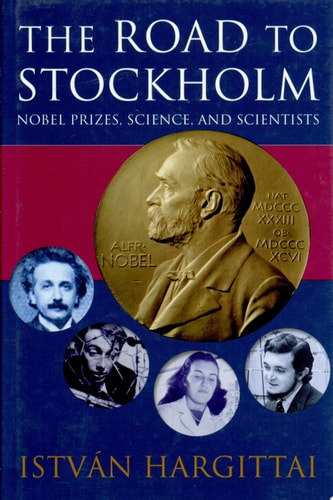
The Road to Stockholm: Nobel Prizes, Science, and Scientists
0
0
As an Amazon Associate and affiliate partner, Menrva Books earns from qualifying purchases. Learn more
Author Description
The Nobel Prize is by far the highest recognition a scientist may receive and the only one with which the general public is familiar. Its prestige has reached improbable heights. At the same time a lot of myth surrounds the Nobel Prize, and this is compounded by the fact that people tend to view scientists with some bewilderment. This book introduces the process of selection of the laureates, discusses the ingredients for scientific discovery and for getting recognition. It reviews the decisive moments of scientific careers en route to the Nobel Prize, points to characteristic features of the laureates, the importance of mentors and venues in scientific careers and other components of success. It also covers some discoverers and discoveries for whom and for which the Nobel Prize never materialized. Whereas there is no general recipe for receiving the Nobel Prize, there are common features of successful scientific careers. The book reveals some information about the scientists' lives and careers that may guide other scientists in increasing their chances of becoming more effective and better recognized players - although it is not expected to help anyone to receive the Nobel Prize! For the general reader The Road to Stockholm reveals the human face of scientists and the human side of their endeavours. The Nobel Prize has served as inspiration for scientists and the general public for a hundred years: this book discusses its problems and celebrates its triumphs.
Menrva's Summary
THE THESIS
This book investigates the complex intersection of scientific achievement, the selection process for the Nobel Prize, and the human characteristics that define a successful career in research. István Hargittai, a physical chemist and professor, utilizes his extensive experience within the scientific community to analyze the factors contributing to high-level recognition. He examines the roles of mentorship, institutional environments, and the nature of discovery itself to determine why certain scientists are honored while others, equally deserving, remain unrecognized. The work serves as a sociological study of the scientific elite and the mechanisms of prestige.
THE SCOPE MAP
What You Will Find
- Analysis of the Nobel Prize selection process and criteria.
- Examination of career trajectories for prominent scientists.
- Discussion of the influence of mentors and research environments.
- Case studies of both laureates and notable scientists who were overlooked.
Scope Limits
- The book does not provide a prescriptive guide or formula for winning a Nobel Prize.
- It does not cover every scientific discipline with equal depth, focusing primarily on chemistry and physics.
THE AUTHORITY PERSPECTIVE
Experts and readers frequently note the accessible yet scholarly tone Hargittai employs to humanize the scientific process. The text is widely regarded as a valuable resource for those interested in the sociology of science and the history of modern research institutions.
Page Count:
511
Publication Date:
2002-01-01
Publisher:
OUP Oxford
ISBN-10:
0191500577
ISBN-13:
9780191500572
Science
Non-Fiction
Biography
Science History
Business Economics
Academic