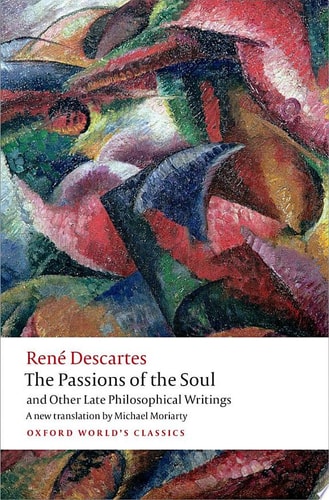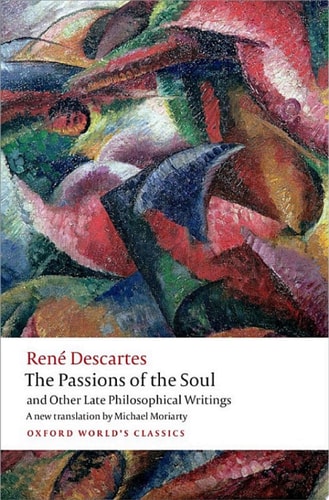
The Passions of the Soul and Other Late Philosophical Writings
0
0
As an Amazon Associate and affiliate partner, Menrva Books earns from qualifying purchases. Learn more
Author Description
'Those most capable of being moved by passion are those capable of tasting the most sweetness in this life.' Descartes is most often thought of as introducing a total separation of mind and body. But he also acknowledged the intimate union between them, and in his later writings he concentrated on understanding this aspect of human nature. The Passions of the Soul is his greatest contribution to this debate. It contains a profound discussion of the workings of the emotions and of their place in human life - a subject that increasingly engages the interest of philosophers and intellectual and cultural historians. It also sets out a view of ethics that has been seen as a radical reorientation of moral philosophy. This volume also includes both sides of the correspondence with Princess Elisabeth of Bohemia, one of Descartes's keenest disciples and shrewdest critics, which played a crucial role in the genesis of The Passions, as well as the first part of The Principles of Philosophy, which sets out the key positions of Descartes's philosophical system. ABOUT THE SERIES: For over 100 years Oxford World's Classics has made available the widest range of literature from around the globe. Each affordable volume reflects Oxford's commitment to scholarship, providing the most accurate text plus a wealth of other valuable features, including expert introductions by leading authorities, helpful notes to clarify the text, up-to-date bibliographies for further study, and much more.
Menrva's Summary
THE THESIS
This volume investigates the complex intersection of mind and body, specifically focusing on the physiological and moral dimensions of human emotion. René Descartes, a foundational figure in modern Western philosophy, utilizes his late-career reflections to reconcile his earlier dualist framework with the lived experience of human passion. By examining the mechanics of the soul and its interaction with the physical body, he proposes a moral philosophy that emphasizes the regulation and understanding of emotional states as a path to human flourishing.
THE SCOPE MAP
What You Will Find
- A comprehensive analysis of the nature and function of human passions.
- The complete text of The Passions of the Soul.
- Correspondence between Descartes and Princess Elisabeth of Bohemia regarding the mind-body union.
- The first part of The Principles of Philosophy outlining his core metaphysical system.
Scope Limits
- The text does not provide a modern neuroscientific account of emotion.
- It does not cover the entirety of Descartes's earlier mathematical or scientific works.
THE AUTHORITY PERSPECTIVE
Scholars and students frequently identify this collection as a critical resource for understanding the evolution of Cartesian thought beyond his early dualism. Experts highlight the inclusion of the correspondence with Princess Elisabeth as a vital component for contextualizing the development of his later moral theories.
Page Count:
400
Publication Date:
2015-01-01
Publisher:
OUP Oxford
ISBN-10:
0191507075
ISBN-13:
9780191507076
Philosophy
Non-Fiction
Ethics
Philosophy French
Metaphysics
17th Century