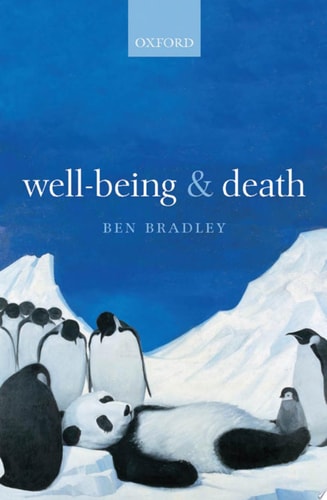
Well-Being and Death
0
0
As an Amazon Associate and affiliate partner, Menrva Books earns from qualifying purchases. Learn more
Author Description
Well-Being and Death addresses philosophical questions about death and the good life: what makes a life go well? Is death bad for the one who dies? How is this possible if we go out of existence when we die? Is it worse to die as an infant or as a young adult? Is it bad for animals and fetuses to die? Can the dead be harmed? Is there any way to make death less bad for us? Ben Bradley defends the following views: pleasure, rather than achievement or the satisfaction of desire, is what makes life go well; death is generally bad for its victim, in virtue of depriving the victim of more of a good life; death is bad for its victim at times after death, in particular at all those times at which the victim would have been living well; death is worse the earlier it occurs, and hence it is worse to die as an infant than as an adult; death is usually bad for animals and fetuses, in just the same way it is bad for adult humans; things that happen after someone has died cannot harm that person; the only sensible way to make death less bad is to live so long that no more good life is possible.
Menrva's Summary
THE THESIS
This work investigates the philosophical relationship between the quality of a human life and the impact of death on the individual. Ben S. Bradley, a scholar of ethics and metaphysics, utilizes a rigorous analytical framework to evaluate whether death constitutes a harm to the deceased. By examining the nature of well-being through the lens of hedonism, the author constructs a logical argument regarding the timing of death and its comparative impact on different stages of life, including infancy and adulthood.
THE SCOPE MAP
What You Will Find
- A hedonistic theory of well-being focusing on pleasure as the primary component of a good life.
- An analysis of the deprivation account of death, which posits that death is harmful because it removes future potential for well-being.
- Philosophical arguments regarding the moral status of animals and fetuses in relation to mortality.
- A temporal examination of when harm occurs in relation to the moment of death.
THE AUTHORITY PERSPECTIVE
Experts in the field of analytic philosophy recognize this text as a significant contribution to the literature on the ethics of mortality. Readers frequently note the clarity of the author's logical structure, which makes complex metaphysical concepts accessible to those interested in the philosophy of death.
Page Count:
224
Publication Date:
2009-05-03
Publisher:
Oxford University Press
ISBN-10:
0199557969
ISBN-13:
9780199557967
Non-Fiction
Philosophy
Metaphysics
Death
Life
Ethics
Community Tags
Similar Books