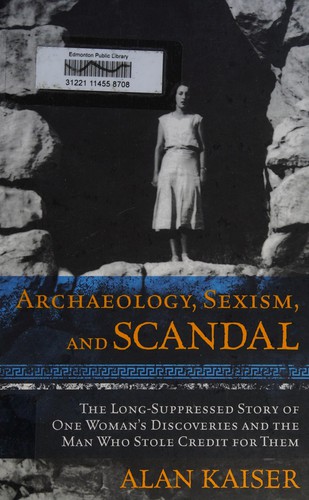
Archaeology, Sexism, and Scandal
0
0
As an Amazon Associate and affiliate partner, Menrva Books earns from qualifying purchases. Learn more
Author Description
The 1931 excavation season at Olynthus, Greece, changed how archaeologists study material culture, and was the nexus of one of the most egregious cases of plagiarism in the history of classical archaeology. Kaiser draws on the private scrapbook that budding archaeologist Mary Ross Ellingson compiled during that dig, and recounts how the unearthing of private homes emerged as a means to examine the day-to-day of ancient life in Greece. He shows that David Robinson stole Ellingson's words and insights for his own, and many fellow academics were complicit in the theft.
Menrva's Summary
THE THESIS
The 1931 excavation season at Olynthus, Greece, became a pivotal moment in classical archaeology, marked by both groundbreaking discoveries in material culture and a significant case of academic plagiarism. Alan Kaiser utilizes the personal scrapbook of Mary Ross Ellingson, a budding archaeologist on the dig, to detail how the excavation of private homes offered new insights into ancient Greek daily life. The narrative exposes how David Robinson allegedly stole Ellingson's work and intellectual property, with many in the academic community remaining complicit in the cover-up.
THE SCOPE MAP
- Detailed account of the 1931 Olynthus excavation season.
- Examination of the study of material culture in archaeology.
- In-depth analysis of a major plagiarism scandal in classical archaeology.
- Focus on the contributions and experiences of archaeologist Mary Ross Ellingson.
- Exploration of David Robinson's alleged theft of Ellingson's work.
- Discussion of academic complicity in scholarly misconduct.
- Insights into the daily life of ancient Greece through domestic excavation.
THE AUTHORITY PERSPECTIVE
This book examines a significant historical event within classical archaeology, focusing on the intersection of academic practice, personal excavation, and scholarly ethics. The narrative is built upon primary source material, specifically the scrapbook of Mary Ross Ellingson, offering a detailed look at the events of the 1931 Olynthus dig. The work aims to shed light on a notorious case of plagiarism and the subsequent academic response, providing a critical perspective on the field's history.
Page Count:
251
Publication Date:
2015-01-01
ISBN-10:
1442230037
ISBN-13:
9781442230033
Biography
Science
History
Non-Fiction
Archaeology
Community Tags
Similar Books