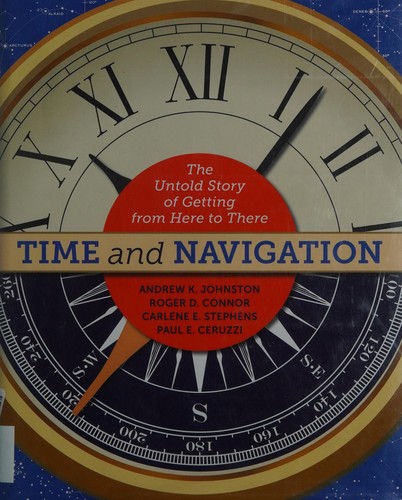
Time and Navigation
0
0
As an Amazon Associate and affiliate partner, Menrva Books earns from qualifying purchases. Learn more
Author Description
If you want to know where you are, you need a good clock. This surprising connection between time and place has been true for centuries and is now being explored in Time and Navigation: The Untold Story of Getting from Here to There, the companion book to the National Air and Space Museum exhibition of the same name. This beautifully illustrated book covers five major periods of navigation history. The first period, when explorers were navigating at sea, spans from Vikings and Polynesians who found their way without clocks, to the eighteenth-century development of the marine chronometer. Explorers then turned their sights to the skies; the need to navigate in the air led to the development of bubble sextants like the type used by Charles Lindbergh as well as the radar technology used during World War II. The mid-century space race required new technology for navigating in space, including the atomic clock. The final two periods of navigation history cover the invention of satellite navigation and its ubiquity in day-to-day modern life on GPS devices, smartphones, and other personal electronics. Complete with sidebars about pioneering navigators as well as missteps in technology that led to later navigation advances, Time and Navigation is a comprehensive exploration of the history of navigation technology and its social implications. It helps us understand where we have been and how we got there so that we can understand where we are going
Menrva's Summary
THE THESIS
The development of accurate timekeeping is intrinsically linked to humanity's ability to navigate across vast distances. This book explores the profound connection between clocks and location, tracing the evolution of navigation technology through five pivotal eras. It begins with ancient mariners who navigated by stars and currents, progressing to the invention of the marine chronometer, and then the challenges of aerial navigation with instruments like bubble sextants and radar. The narrative continues through the space age, highlighting the necessity of atomic clocks for space travel, and concludes with the modern era of satellite navigation and ubiquitous GPS technology.
THE SCOPE MAP
- Exploration of navigation methods from Vikings and Polynesians to the marine chronometer.
- Details on aerial navigation technologies including bubble sextants and WWII radar.
- The role of atomic clocks in mid-century space race navigation.
- The invention and widespread adoption of satellite navigation and GPS.
- Sidebars featuring pioneering navigators and technological missteps that spurred innovation.
- Analysis of the social implications of navigation technology advancements.
THE AUTHORITY PERSPECTIVE
This book, serving as a companion to a National Air and Space Museum exhibition, offers a comprehensive look at the history of navigation. The publisher's description highlights its detailed exploration of five major periods, from ancient sea voyages to modern GPS devices. It emphasizes the connection between timekeeping and spatial awareness, suggesting a narrative rich with historical context and technological evolution. The inclusion of sidebars on navigators and technological advancements indicates a well-rounded approach to the subject matter.
Page Count:
224
Publication Date:
2015-01-01
ISBN-10:
1588344916
ISBN-13:
9781588344915
History
Non-Fiction
Science & Technology
Maritime history
Aviation History
Navigation
Community Tags
Similar Books