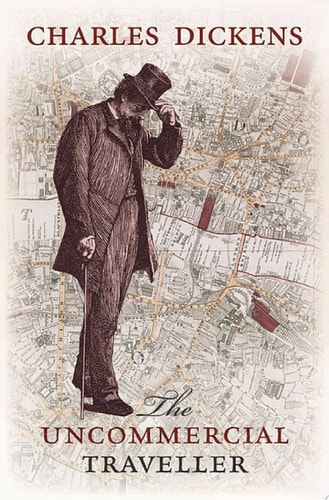
The Uncommercial Traveller
0
0
As an Amazon Associate and affiliate partner, Menrva Books earns from qualifying purchases. Learn more
Author Description
'And O, Angelica, what has become of you, this present Sunday morning when I can't attend to the sermon; and, more difficult question than that, what has become of Me as I was when I sat by your side?' At the height of his career, around the time he was working on Great Expectations and Our Mutual Friend, Charles Dickens wrote a series of sketches, mostly set in London, which he collected as The Uncommercial Traveller. In the persona of 'the Uncommercial', Dickens wanders the city streets and brings London, its inhabitants, commerce and entertainment vividly to life. Sometimes autobiographical, as childhood experiences are interwoven with adult memories, the sketches include visits to the Paris Morgue, the Liverpool docks, a workhouse, a school for poor children, and the theatre. They also describe the perils of travel, including seasickness, shipwreck, the coming of the railways, and the wretchedness of dining in English hotels and restaurants. The work is quintessential Dickens, with each piece showcasing his imaginative writing style, his keen observational powers, and his characteristic wit. In this edition Daniel Tyler explores Dickens's fascination with the city and the book's connections with concerns evident in his fiction: social injustice, human mortality, a fascination with death and the passing of time. Often funny, sometimes indignant, always exuberant, The Uncommercial Traveller is a revelatory encounter with Dickens, and the Victorian city he knew so well.
Menrva's Summary
THE THESIS
This collection of sketches investigates the social landscape and urban experience of Victorian London through the eyes of a wandering observer. Charles Dickens, a preeminent Victorian novelist, utilizes his keen observational skills to document the disparities of city life, the mechanics of commerce, and the personal toll of rapid industrialization. By blending autobiographical reflection with journalistic reportage, he constructs a framework that critiques institutional failures while capturing the ephemeral nature of the nineteenth-century metropolis.
THE SCOPE MAP
What You Will Find
- Observations on London street life, workhouses, and educational institutions for the poor.
- Reflections on the physical and psychological impacts of travel, including railways and maritime experiences.
- Commentary on the state of Victorian commerce, entertainment, and public infrastructure.
Scope Limits
- The text does not provide a comprehensive historical survey of the era but rather focuses on subjective, localized experiences.
- It excludes the structured plot-driven narratives found in Dickens's major novels, favoring episodic sketches.
THE AUTHORITY PERSPECTIVE
Scholars and critics frequently identify this work as a vital bridge between Dickens's journalistic roots and his mature fictional output. Readers often note that the prose maintains a high level of descriptive density, offering a unique, intimate look at the author's personal preoccupations with mortality and social reform.
Page Count:
437
Publication Date:
2015-01-01
Publisher:
OUP Oxford
ISBN-10:
0191510181
ISBN-13:
9780191510182
English
English & College Success
Victorian
London
Travel Writing
Classic Literature
English literature
Social Commentary
Essays
Community Tags
Other Editions(3)

Similar Books