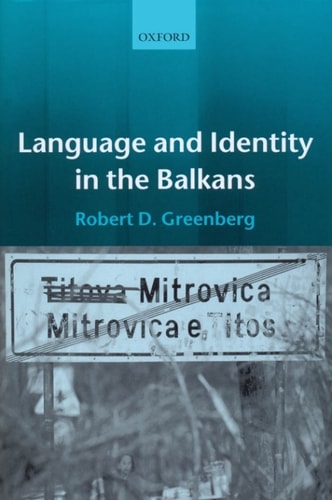
Language and Identity in the Balkans: Serbo-Croatian and Its Disintegration
0
0
As an Amazon Associate and affiliate partner, Menrva Books earns from qualifying purchases. Learn more
Author Description
Language rifts in the Balkans are endemic and have long been both a symptom of ethnic animosity and a cause for inflaming it. But the break-up of the Serbo-Croatian language into four languages on the path towards mutual unintelligibility within a decade is, by any previous standard of linguistic behaviour, extraordinary. Robert Greenberg describes how it happened. Basing his account on first-hand observations in the region before and since the communist demise, he evokes the drama and emotional discord as different factions sought to exploit, prevent, exacerbate, accelerate or just make sense of the chaotic and unpredictable language situation. His fascinating account offers insights into the nature of language change and the relation between language and identity. It also provides a uniquely vivid perspective on nationalism and identity politics in the former Yugoslavia.
Menrva's Summary
THE THESIS
This book investigates the rapid and extraordinary disintegration of the Serbo-Croatian language into four distinct national languages following the collapse of Yugoslavia. Robert D. Greenberg, a specialist in Slavic linguistics, utilizes his extensive field research and first-hand observations conducted in the region both before and after the fall of communism. He argues that language policy became a primary instrument for constructing national identity and fueling ethnic conflict during the turbulent transition period.
THE SCOPE MAP
What You Will Find
- Analysis of the linguistic divergence of Serbian, Croatian, Bosnian, and Montenegrin.
- Examination of the intersection between state-sponsored language reform and nationalist ideology.
- Primary source accounts and ethnographic observations from the Balkan region.
Scope Limits
- The text does not provide a comprehensive history of the entire Yugoslavian war, focusing specifically on linguistic shifts.
- It does not offer a predictive model for future language evolution in the region.
THE AUTHORITY PERSPECTIVE
Scholars and linguists frequently cite this work as a definitive study on the sociolinguistic consequences of the Yugoslav breakup. Readers often note the clarity with which Greenberg navigates complex political and linguistic data to explain how language serves as a tool for national identity.
Page Count:
200
Publication Date:
2004-01-01
Publisher:
Oxford University Press
ISBN-10:
0191514551
ISBN-13:
9780191514555
History
English & College Success
Yugoslavia
English
Linguistics
Anthropological linguistics
Balkan Studies
Community Tags
Similar Books