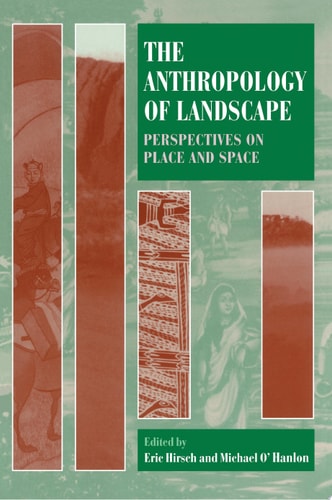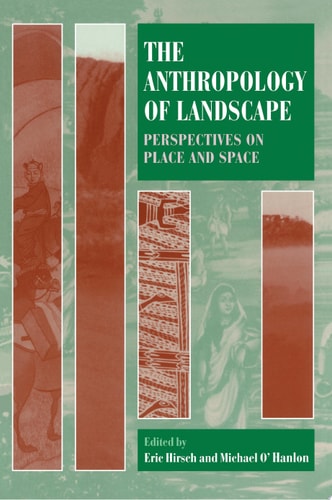
The Anthropology of Landscape: Perspectives on Place and Space
0
0
As an Amazon Associate and affiliate partner, Menrva Books earns from qualifying purchases. Learn more
Author Description
Landscape has long had a submerged presence within anthropology, both as a framing device which informs the way the anthropologist brings his or her study into "view", and as the meaning imputed by local people to their cultural and physical surroundings. A principal aim of this volume follows from these interconnected ways of considering landscape: the conventional, Western notion of "landscape" may be used as a productive point of departure from which to explore analogous ideas; local ideas can in turn reflexively be used to interrogate the Western construct. The Introduction argues that landscape should be conceptualized as a cultural process: a process located between place and space, foreground actuality and background potentiality, image and representation. In the chapters that follow, nine noted anthropologists and an art historian exemplify this approach, drawing on a diverse set of case studies. These range from an analysis of Indian calendar art to an account of Israeli nature tourism, and from the creation of a metropolitan "gaze" in nineteenth-century Paris to the soundscapes particular to the Papua New Guinean rainforests. The anthropological perspectives developed here are of cross-disciplinary relevance; geographers, art historians, and archaeologists will be no less interested than anthropologists in this re-envisaging of the notion of landscape.
Menrva's Summary
THE THESIS
This volume investigates how landscape functions as a cultural process situated between the physical reality of place and the abstract potentiality of space. Editors Eric Hirsch and Michael O'Hanlon, both established scholars in social anthropology, curate a collection of essays that challenge the Western construct of landscape. By utilizing local cultural interpretations to interrogate Western academic frameworks, the authors argue that landscape is not merely a static backdrop but a dynamic, reflexive medium of human experience.
THE SCOPE MAP
What You Will Find
- Theoretical framework defining landscape as a process between image and representation
- Comparative analysis of Western and non-Western spatial constructs
- Case studies ranging from Indian calendar art to Papua New Guinean soundscapes
- Historical analysis of the metropolitan gaze in nineteenth-century Paris
Scope Limits
- Does not provide a comprehensive history of landscape architecture or design
- Does not focus on purely ecological or environmental science perspectives
THE AUTHORITY PERSPECTIVE
Scholars and students frequently cite this text as a foundational contribution to the anthropological study of space and place. Experts highlight the volume for its cross-disciplinary utility, noting that its theoretical rigor remains relevant for geographers, archaeologists, and art historians alike.
Page Count:
280
Publication Date:
1995-01-01
Publisher:
Clarendon Press
ISBN-10:
0191512125
ISBN-13:
9780191512124
Landscapes
Anthropology
Geography
Sociology
Cultural Anthropology
Cognition and culture
Social Science
Earth Sciences