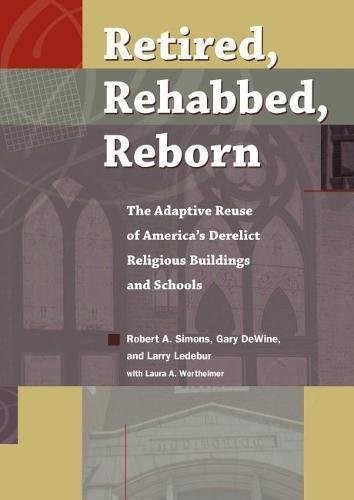
Retired, Rehabbed, Reborn
0
0
As an Amazon Associate and affiliate partner, Menrva Books earns from qualifying purchases. Learn more
Author Description
"Retired, Rehabbed, Reborn features ten in-depth case studies of adaptive reuse outcomes for religious buildings and public schools that have achieved varying degrees of success. Several case vignettes appear within various chapters to illustrate specific points. The book is a useful tool for architects, planners, developers, and others interested in reusing these important structures. In addition to covering the demographics of demand and supply for historic buildings, the authors demonstrate how to identify a worthy project and how to determine a building's highest and best use, its market potential, and its financial feasibility, including costs and public subsidies. Finally, they address the planning process and how to time the redevelopment and repurposing of these venerable buildings. Simons, DeWine, and Ledebur explain that while each rehab deal is unique and tricky, especially for prominent community structures that hold significant nostalgic and historical value to community stakeholders, there are identifiable patterns of successful and unsuccessful approaches, patterns that are addressed in turn throughout the redevelopment process"
Menrva's Summary
THE THESIS
This book investigates the successful and unsuccessful outcomes of repurposing religious buildings and public schools. It provides ten in-depth case studies, supplemented by shorter vignettes, to illustrate key principles for architects, planners, and developers. The authors analyze market demand, financial feasibility, and the planning process for these unique redevelopment projects, emphasizing the importance of community stakeholder value.
THE SCOPE MAP
- Ten in-depth case studies of adaptive reuse for religious buildings and public schools.
- Analysis of market demand and supply for historic buildings.
- Methods for identifying worthy projects and determining a building's highest and best use.
- Assessment of market potential and financial feasibility, including costs and public subsidies.
- Guidance on the planning process and timing of redevelopment.
- Discussion of community stakeholder value and its impact on historic structures.
THE AUTHORITY PERSPECTIVE
The book is presented as a practical tool for professionals involved in adaptive reuse projects, particularly for historically significant community buildings. The publisher's description highlights its utility for architects, planners, and developers by detailing methods for project identification, financial assessment, and planning. It suggests that while each project is unique, identifiable patterns of success and failure can guide redevelopment efforts.
Page Count:
382
Publication Date:
2017-01-01
ISBN-10:
1606352563
ISBN-13:
9781606352564
Non-Fiction
Architecture
Historic Preservation
urban planning
Community Tags
Similar Books